

You’re halfway up an extension ladder, one hand holding a hose and the other trying to keep a paper towel from blowing into the driveway. The ladder shifts slightly. Water runs toward the sill, your shoes are wet, and the second-story pane still has a dull film across it. That’s the moment to stop treating the job as an ordinary cleaning chore.
How to clean second story windows safely starts with a risk decision, not a stronger soap. Ground-based equipment is usually the first choice, while ladder work belongs only on stable, accessible windows where you can control the footing, reach, glass, and runoff. For the full height-by-height method, tool choices and California’s rules, see our guide to cleaning high windows.
Table of Contents
- The Second-Story Window Problem Most People Underestimate
- Gear, Weather, and Ground Prep Before You Start
- The Ground-Based Method with a Water-Fed Pole
- When a Ladder Is the Only Option
- Matching Your Technique to Coastal Salt, Hard Water, and Dust
- Deciding Between DIY and Hiring a Professional
- A Simple Maintenance Rhythm and Final Questions
The Second-Story Window Problem Most People Underestimate
A second-story window combines several problems that rarely appear together at ground level. You’re working above hard surfaces, handling water near your feet, reaching away from your center of balance, and pressing a tool against glass you may not be able to inspect closely. A small mistake can become a fall, water intrusion, or permanent glass damage.

The four hazards to look for first are straightforward:
- Ladder kick-out: Wet paving, soft soil, an uneven driveway, or a hose under a ladder foot can shift the base.
- A fall onto landscaping or concrete: Shrubs may hide rocks, edging, irrigation parts, or branches that make a landing worse.
- Water entering frames and walls: A blocked weep hole, failed caulk joint, or badly directed spray can send water where it shouldn’t go.
- Glass and coating damage: A dirty scraper blade or abrasive pad can mark the pane, including coated low-E glass.
The safety concern isn’t theoretical. In 2020 there were 161 workplace fatalities and 22,710 workplace injuries from ladders, according to NIOSH’s ladder safety page. Those are people who climb for a living, which is a good reason to treat an occasional climb at home with more caution, not less.
Practical rule: If the setup makes you think about balance before it makes you think about cleaning, change the method.
A safe plan controls access before it controls dirt. For most reachable upper panes, that means a purified-water pole from the ground. If the pole can’t reach because of a deep recess, overhang, narrow side yard, or unusual roofline, the next question isn’t “How can I lean farther?” It’s whether the window belongs in a professional job.
Gear, Weather, and Ground Prep Before You Start
Preparation prevents most avoidable problems. Before water touches the glass, walk the property and decide where equipment, runoff, screens, and removed storm panels will go.
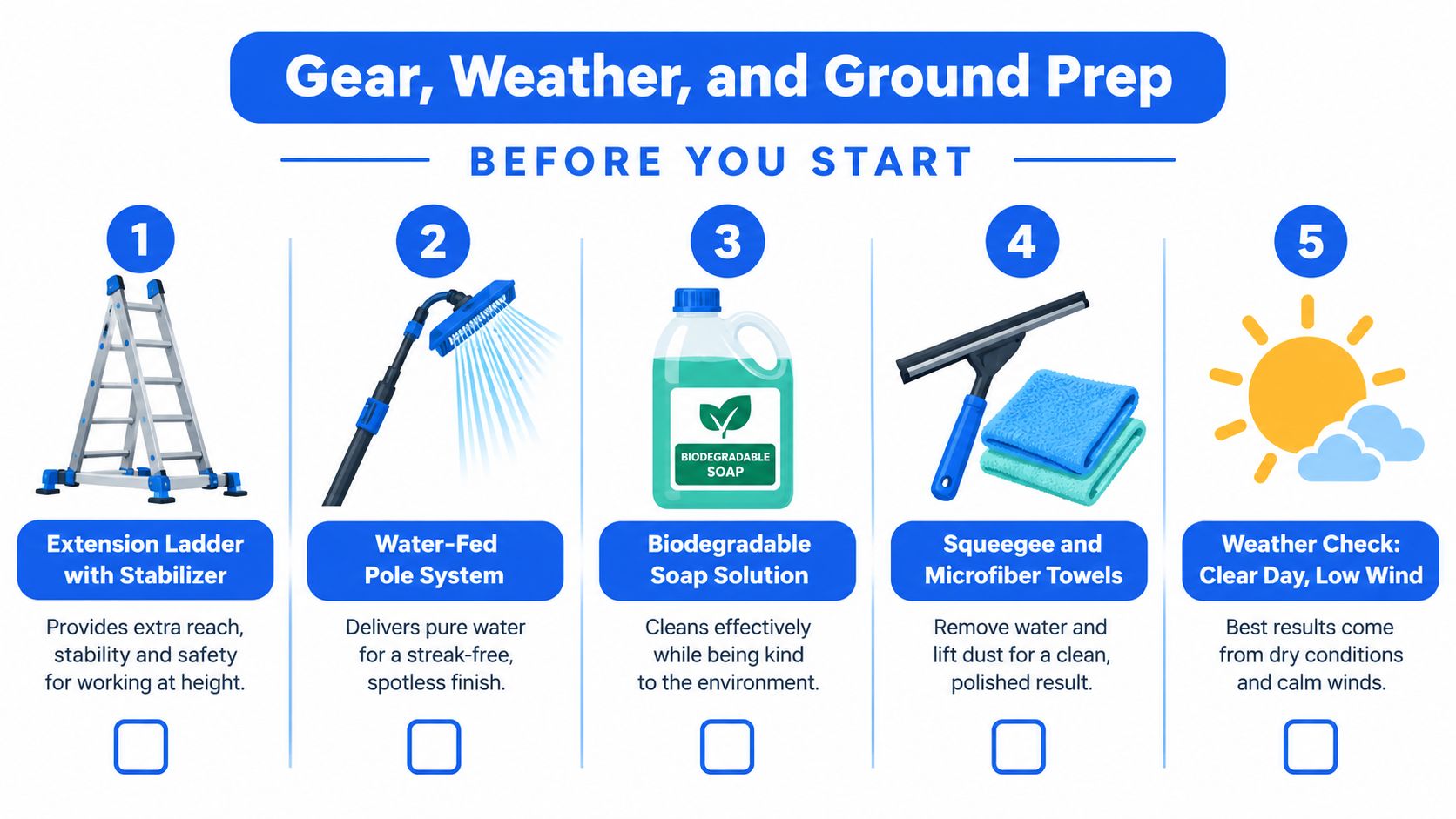
For traditional work, gather an extension ladder with a stabilizer, a T-bar applicator, a clean microfiber sleeve, a squeegee channel with fresh rubber, a scraper with a new blade, a screen brush, drop cloths, and a bucket with a grit guard. If you have access to a water-fed pole, it should be your first option for reachable exterior panes. Use a low-residue, biodegradable solution for hand-cleaning; our window washing soap guide covers what to look for.
Set the weather and work area
An overcast, calm day with no rain in the forecast gives you more control. Cloud cover slows drying, still air keeps debris off wet glass and keeps a long pole or ladder steady, and dry weather keeps footing and runoff predictable. If the glass is hot in direct sun, soap can dry before you finish the pass.
Protect the property before mixing solution:
- Landscaping: Cover delicate plants, move portable pots, and keep dirty water from pooling around beds.
- Walkways: Route hoses along the edge, not across the primary walking path.
- Pool edges: Keep electrical equipment and chemical solutions well away from the water.
- Interior surfaces: Place towels below open windows if you’re cleaning from inside.
Remove screens and storm panels carefully. Mark each screen by location with removable tape, then set it on a padded, shaded surface. Brush or vacuum loose grit before washing. Finally, inspect frames and sills for cracked caulk, peeling paint, loose trim, and blocked weep holes. Those conditions can turn a normal rinse into a water-management problem.
The Ground-Based Method with a Water-Fed Pole
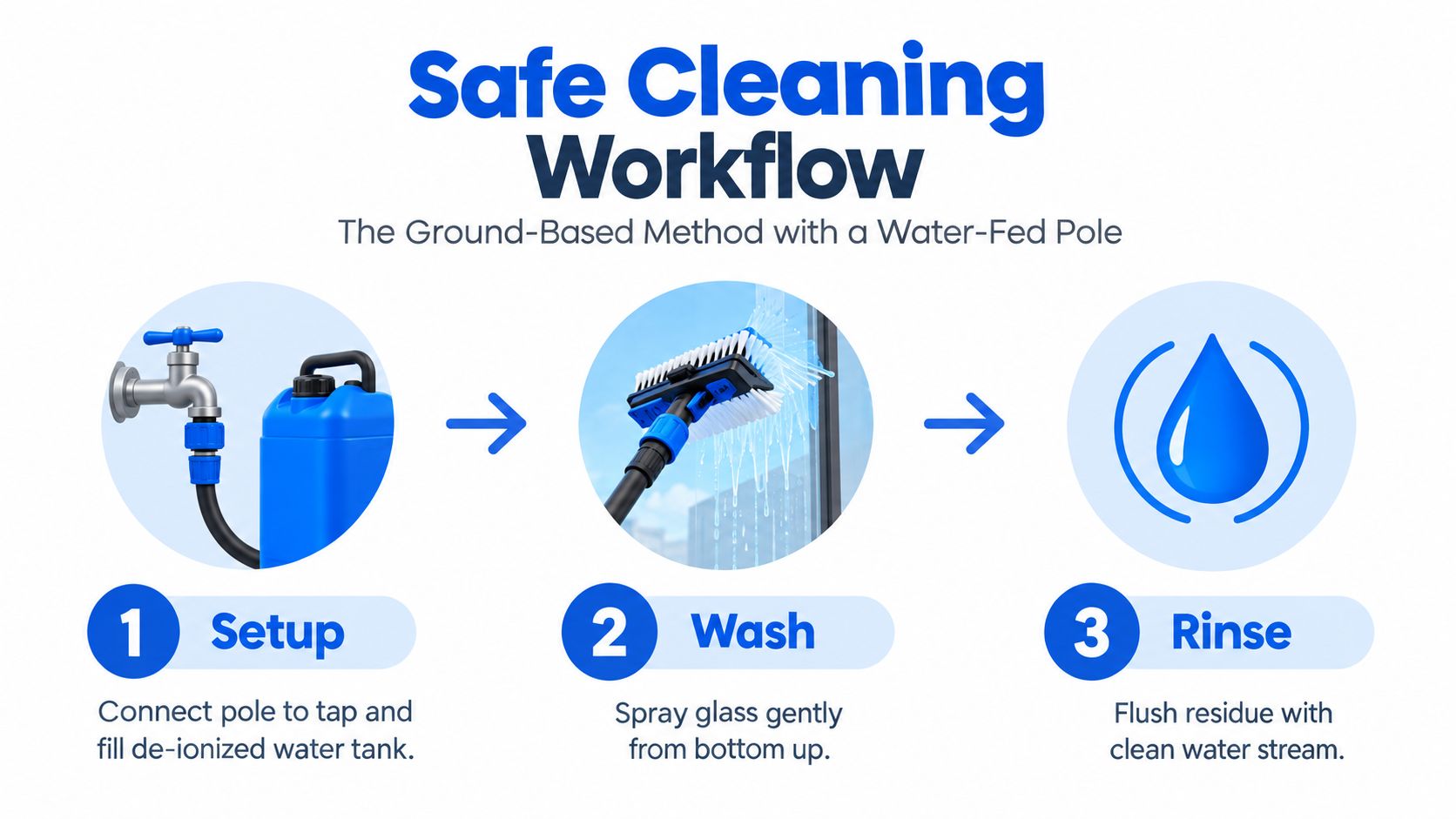
A water-fed pole is the default method for any second-story pane you can reach securely from the ground. The system sends purified water through a hose to a brush on a telescoping pole. You agitate the glass, then rinse it with mineral-free water that can dry without the spotting left by ordinary tap water.
Wash, agitate, and rinse
Start by connecting the pole to its water source and checking the brush, hose, and fittings. Let water run through the brush head briefly so trapped water and debris leave the line. Don’t put a dry, gritty brush against the pane.
Work in a controlled sequence:
- Pre-rinse the glass and frame. Loosen surface dust and webs before brushing.
- Start at the top. Use overlapping horizontal passes, keeping the brush face flat against the glass.
- Agitate stuck dirt. Spend extra time on pollen film, bird residue, and grime along the edges.
- Rinse from top to bottom. Keep the brush moving while the clean water sheets down and carries loosened material away.
- Check the sill. Make sure dirty water hasn’t collected and dried along the lower frame.
Purified water matters because minerals in tap water stay behind when it evaporates. Unger, which makes pure-water window cleaning systems, says rinse water above 10 ppm of total dissolved solids (TDS) raises the risk of streaks and water spots, and recommends keeping it around 5 to 10 ppm (Unger). For comparison, the US EPA’s non-mandatory secondary guideline for TDS in drinking water is 500 mg/L, and it lists deposits and staining among the effects above that level (US EPA). In coastal areas, hard-water zones, or properties exposed to sprinkler overspray, rinse quality often matters more than the amount of soap. A water-fed pole also reduces repeated ladder repositioning and keeps the operator on the ground.
For a closer look at the equipment and water path, see how a water-fed pole system works.
A pole is especially useful for second-story exteriors, single-story areas with overhangs, vaulted great-room windows, and any location where a ladder would sit on soft soil or beside a walkway. It isn’t magic. A pole won’t solve a recessed pane, a blocked approach, or mineral deposits that need careful spot treatment. It does, however, remove the ladder from the most repeatable part of the job.
When a Ladder Is the Only Option
Some windows defeat ground-based tools. Deep eaves can block the brush, narrow side yards may prevent the correct pole angle, and recessed openings can keep the brush from contacting the full pane. A third-floor gable over a walkway may also require specialized access rather than a longer consumer pole.
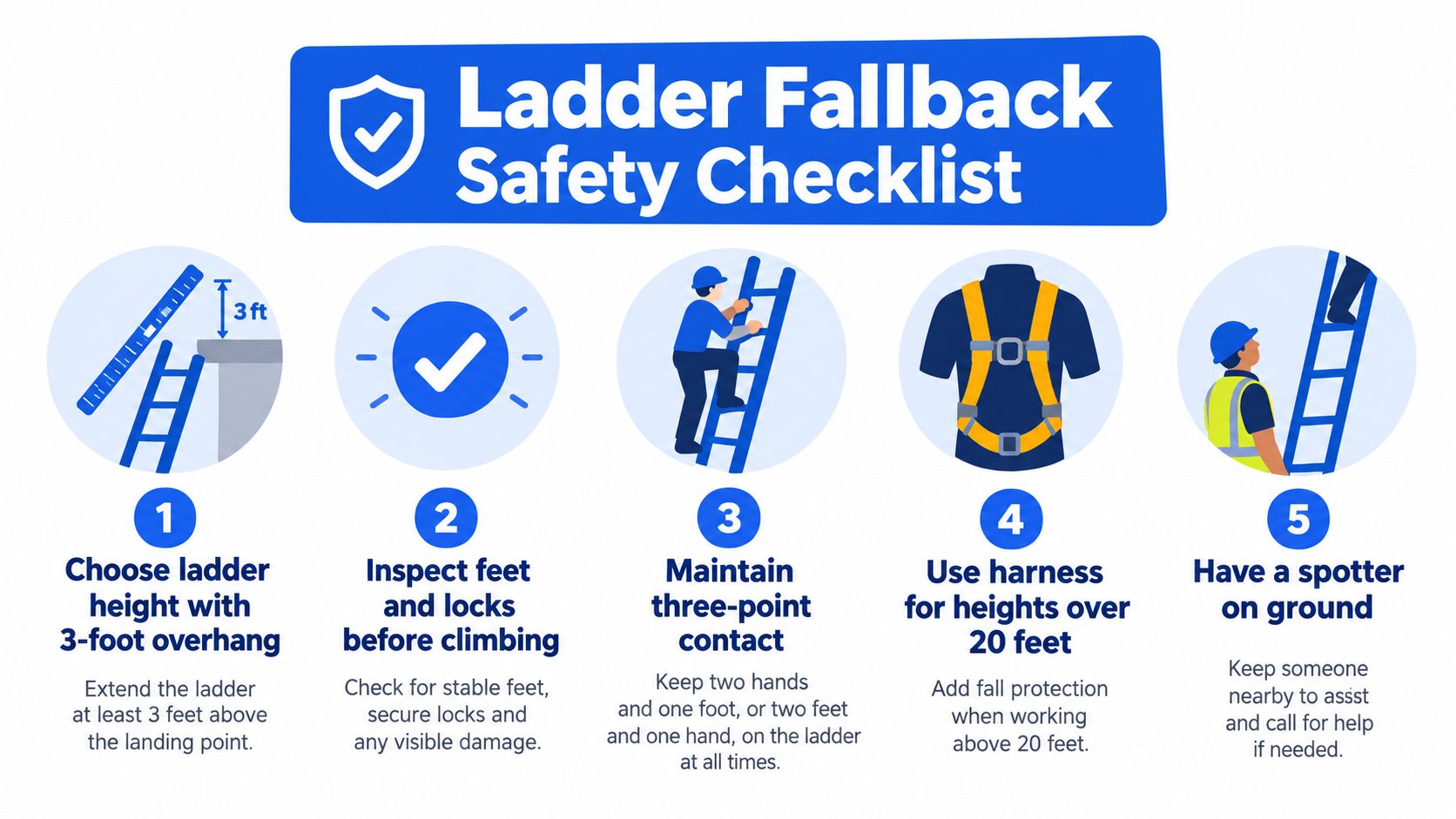
If you must use a ladder, choose one rated for the working height and inspect the feet, locks, rails, and labels first. OSHA’s ladder standard sets the placement with what is often called the 4-to-1 rule: the foot of a leaning ladder should sit out from the wall about one quarter of the ladder’s working length. The same standard limits ladders to stable, level surfaces unless they are secured, and when a ladder is used to step onto a roof or balcony, its side rails must extend at least 3 feet above that landing (OSHA 1926.1053). NIOSH describes the same setup as about a 75-degree angle for extension ladders (CDC/NIOSH). A stabilizer or standoff arm keeps the rails away from siding and improves contact around the window.
Keep your hands free and your attention on the climb
A tool belt or bucket hook keeps equipment out of your hands. OSHA’s general industry ladder rule requires workers to face the ladder when climbing, keep at least one hand on it, and never carry an object or load that could make them lose balance. It also bars moving, shifting, or extending a ladder while someone is on it (OSHA 1910.23). Ladder mitts can protect vinyl siding, while a ground spotter can watch the base, hose, and surrounding area. Never stretch sideways to reach the last corner. Climb down and move the ladder instead.
Stop and call a professional if the ground slopes or stays slick, the window sits above a pool, electrical lines enter the work zone, storm damage has weakened the structure, or the height is beyond anything you have practiced. Our high windows guide breaks down which method fits each height before you decide whether the opening suits a ground-based approach.
Matching Your Technique to Coastal Salt, Hard Water, and Dust
A clean pane can look worse after washing if the first rinse redistributes the contamination. The right method depends on what is stuck to the glass, not just on how high the window sits.
| Environment | Root Cause | Technique Change |
|---|---|---|
| Coastal property | Salt aerosol dries into a fine haze and chloride film | Rinse with fresh water first, then wash and use a squeegee pass to remove the film |
| Sprinkler exposure | Minerals remain after hard water evaporates | Soak deposits with clean water and a mild, non-abrasive glass cleaner before the full wash, and keep acids off coated glass |
| Dry, dusty or Santa Ana conditions | Fine grit can act as an abrasive in wet solution | Dry dust-mop first, then use separate wash and rinse buckets |
| High-pollen property | Pollen collects on screens and transfers back to the glass | Remove screens, vacuum them, then wash with low-sudsing soap and rinse thoroughly |
Coastal salt needs a clean first rinse
Salt crystals can scratch when you drag them across dry glass with a brush or cloth. Flood the surface with fresh water before applying soap. Once the salt film has softened, wash normally and finish with a squeegee pass if the pane can be reached safely.
Hard-water spots need treatment before washing
Sprinkler deposits aren’t ordinary dirt. A quick wash may leave the cloudy mineral outline intact, so give the affected areas a long soak with clean water and a mild, non-abrasive glass cleaner, work them with a soft applicator, and squeegee before the solution dries. Keep razor blades, abrasive pads, and acid restorers off coated or filmed glass. Our guide to removing hard-water spots from windows explains how to tell whether a spot is still removable and which products are safe on which glass.
Dust requires restraint. A dry pass lifts loose grit before water turns it into abrasive slurry, while a two-bucket setup keeps dirty solution away from the clean applicator. Screens deserve their own sequence because pollen lodged in the mesh can fall onto freshly washed glass.
Deciding Between DIY and Hiring a Professional
DIY makes sense when the panes are accessible from stable ground, the glass is familiar, and you can complete the work without leaning, rushing, or improvising. Hiring a professional makes more sense when one of those conditions disappears.
Use four questions to make the decision.
Height and access
Can you reach the entire pane from the ground with a stable pole, or does the window require a ladder placement that blocks a walkway? A professional can use purified-water equipment for suitable upper glass and select another access method where the pole can’t make full contact.
Glass and coatings
Tempered glass, low-E coatings, skylights, and large picture windows deserve extra caution. A scraper, abrasive pad, or trapped grit can cause damage that a later wash won’t reverse. If you don’t know the glass type or the pane is expensive to replace, professional assessment is sensible.
Frames and screens
Rotted sills, brittle vinyl, peeling paint, failed caulk, and painted-in screens can break during removal or allow water into the assembly. A careful cleaner should identify those conditions before beginning rather than treating them as normal dirt.
Your risk tolerance
A sloped yard, nearby pool, electrical line, or limited ladder experience changes the decision even when the window appears reachable. The cheapest method on paper isn’t the safest method if one slip can damage a person or property.
A professional also brings equipment and process control that most homeowners don’t have, including purified-water rigs, liability insurance, screen-cleaning tools, and experience spotting failing seals.
For Ventura County and Santa Barbara County homeowners, Aloha Window Bros cleans windows, screens, frames, and sills in one visit, with a water-fed pole system for skylights and hard-to-reach glass (window washing service). The company is fully insured and offers free on-site quotes, which lets you see the access plan before work begins. For typical local pricing, see what window cleaning costs in Ventura County.
A Simple Maintenance Rhythm and Final Questions
A practical maintenance rhythm prevents heavy buildup from turning a manageable rinse into a restoration job. For most homes that means a professional clean every 3 to 6 months, and more often near the coast, trees, or construction. Shorten the interval when salt, dust, sprinkler spray, or pollen repeatedly reaches the glass; our guide to how often windows should be cleaned breaks down schedules by exposure.
Routine visits can use a water-fed pole for safe exterior rinsing, while deeper cleaning may require detailed screen, sill, and frame work. The right frequency is the one that keeps contamination from hardening between visits.
Keep the inspection simple:
- Check seals and sills: Look for cracked caulk, soft wood, peeling paint, or standing water.
- Rinse screens separately: Don’t reinstall a screen while pollen or grit remains embedded in the mesh.
- Wipe sills dry: Remove residue instead of allowing dirty water to evaporate at the frame.
- Watch sprinkler splash zones: Redirect spray before repeated mineral deposits become a glass problem.
Frequently asked questions
What is the safest way to clean second story windows?
Stay on the ground whenever you can. A water-fed pole sends purified water through a hose to a brush on a telescoping pole, so you can scrub and rinse upper glass without climbing. Save the ladder for panes the pole cannot reach, and call a professional if the ground slopes, the window sits above a pool, or electrical lines enter the work zone.
How should an extension ladder be set up for window cleaning?
Follow the 4-to-1 rule in OSHA's ladder standard: set the foot out from the wall about one quarter of the ladder's working length, which NIOSH describes as about a 75-degree angle. Use it only on stable, level ground unless it is secured, and if you step onto a roof or balcony the side rails must extend at least 3 feet above that landing. Face the ladder and keep at least one hand on it while climbing.
Will hard tap water leave spots on second-story glass?
It can. Dissolved minerals stay behind when water evaporates, especially after sprinkler overspray. Unger, a maker of pure-water window cleaning systems, says rinse water above 10 ppm of total dissolved solids raises the risk of streaks and water spots, while the US EPA's non-mandatory guideline for TDS in drinking water is 500 mg/L. Purified water reduces that residue, but established spots may need a separate soak first.
How often should second story windows be cleaned?
Most homes do well with a professional clean every 3 to 6 months, and more often near the coast, trees, or construction. Salt, dust, sprinkler spray, and pollen that repeatedly reach the glass all shorten the interval. The right frequency is the one that keeps contamination from hardening on the glass between visits, when a routine rinse is no longer enough.
How can I spot frame or sealant damage early?
Look for cracked caulk, peeling paint, soft sill material, loose trim, blocked weep holes, or water that stays on the sill after rinsing. These conditions can let water into the window assembly during cleaning. Stop cleaning that area if the structure looks compromised and arrange an inspection before the next wash.
If your second-story windows need more than a cautious DIY rinse, Aloha Window Bros can clean upper glass, screens, frames, and sills with a water-fed pole system and property-protection practices. Request a free on-site quote for service in Ventura County or Santa Barbara County, and get a safe access plan before the next ladder comes out.