

Most homes should have their exterior windows cleaned at least twice a year, usually once in spring and once in fall. That baseline gets tighter fast in the world, with higher-exposure homes often needing quarterly cleaning, coastal exteriors sometimes needing service every 2 to 4 weeks, and storefront glass often needing monthly attention.
If you’re looking out at hazy morning light in Ventura, Montecito, or Oxnard and wondering whether your windows are “dirty enough yet,” you’re asking the right question the wrong way. The better question is not just how often should windows be cleaned. It’s what is landing on your glass where you live, and how quickly is it building up?
A house a few blocks from the ocean doesn’t get dirty like a house tucked farther inland in Thousand Oaks. A home under trees collects different grime than one facing an open road. A pane hit by sprinkler overspray behaves differently from one shaded all day. That’s why generic advice can feel frustrating. It gives you a calendar, but not a reason.
Table of Contents
- Introduction Why Window Cleaning Frequency Matters More Than You Think
- How Often Most Homes Need Window Cleaning
- Coastal Salt Inland Dust and Hard Water How Location Changes Your Schedule
- Signs Your Windows Are Overdue for a Cleaning
- Seasonal Window Cleaning Calendar for Ventura and Santa Barbara Counties
- Simple Maintenance Tips and What to Expect From Professional Service
- Choosing the Right Cleaning Interval for Your Home or Business
Introduction Why Window Cleaning Frequency Matters More Than You Think
One neighbor wakes up to a soft marine layer and a salty film on the west-facing glass. Another wakes up inland to dusty panes after a windy afternoon. Both homes may look “kind of dirty,” but the cause is different, which means the schedule should be different too.
That difference matters because window cleaning isn’t only about shine. It helps preserve clear views, easier maintenance, cleaner screens, and less buildup on frames and sills. Once a layer of residue sticks to glass, the next layer clings faster. What started as light haze can turn into stubborn film.
A simple way to think about it
Glass gets dirty the way a white car gets dirty. You may not notice the first light layer. Then one morning the sun hits it sideways and suddenly everything looks dull. Windows work the same way, except they also collect:
- Airborne dust that settles gradually
- Pollen that sticks during bloom periods
- Salt mist near the coast
- Windblown grit after dry local wind events
- Mineral spots from sprinklers or rinse water
Practical rule: Treat twice-a-year cleaning as a floor, not a finish line.
The most useful schedule is exposure-based. Standard homes often do fine with a spring and fall routine. Homes with more exposure need shorter intervals. Businesses compress the schedule even more because the glass sits in constant public view.
Why local homeowners get mixed signals
A lot of national advice assumes all dirt arrives slowly and evenly. Ventura County and Santa Barbara County don’t work like that. Local conditions come in bursts. You get salt onshore. You get dry wind. You get dust after landscaping, road work, or a stretch without rain. Then the first mist or drizzle turns that dust into visible streaks.
That’s why many homeowners feel like they “just had the windows cleaned” and yet the glass already looks off again.
A better approach is to match your schedule to where you live, what surrounds your home, and what happened recently. That’s how you avoid overcleaning protected windows and undercleaning exposed ones.
How Often Most Homes Need Window Cleaning
A good starting rule for a typical home is simple: clean the windows at least twice a year. National home-maintenance guidance often points to a spring and fall rhythm, and one independent guide gives the same baseline while noting that some residential settings need shorter intervals because grime builds faster (Invisible Glass guidance on residential and commercial intervals).
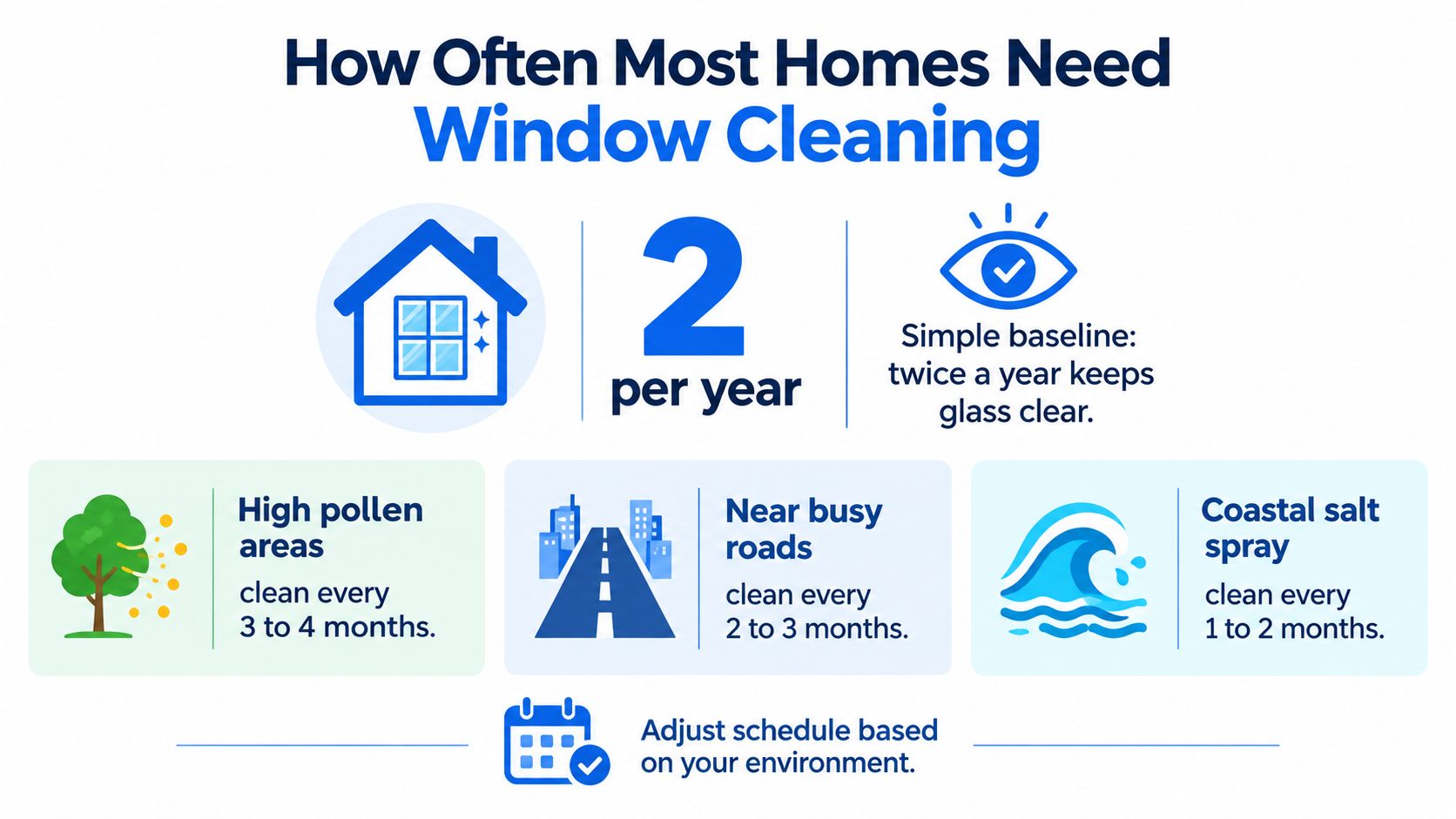
That twice-a-year rule works like a basic oil-change sticker on a car. It gives you a safe default. It does not account for how you drive, or in this case, where your home sits and what hits the glass between cleanings.
Start with the baseline, then test your exposure
If your home is fairly sheltered, away from the beach, away from busy roads, and not getting hammered by sprinklers or tree debris, two cleanings per year is a reasonable place to begin.
Then check the conditions that usually shorten the gap:
-
Dust or traffic near the property
Fine road dust can settle so gradually that you stop noticing it until late-afternoon sun lights up the glass. Homes near busier streets often need more frequent exterior cleaning. -
Pollen, sap, or landscaping debris
Glass near flowering plants and shade trees usually loses that clear look faster, especially in spring. -
Visibility from inside and outside
A front picture window or a slider by the patio reaches your annoyance threshold sooner than a small side window nobody studies closely. -
Spots that do not wipe away easily
Once residue starts clinging instead of dusting off, the window is usually asking for a tighter schedule.
Why “twice a year” often falls short here
A lot of window dirt does not arrive as one even layer. It builds more like flour on a kitchen counter after a week of cooking. First a light film lands. Then moisture gives the next layer something to grab. After that, the glass starts looking dull sooner, even if the buildup still seems thin.
That pattern matters in Ventura and Santa Barbara counties because local buildup often comes in bursts, not in a slow, tidy timeline. A calm stretch can make a twice-a-year plan feel fine. Then coastal salt, a dry wind event, or hard-water spray changes the picture fast.
For many homes, that means the answer is not “every six months” so much as “start at six months, then shorten if your location keeps loading the glass.” Homes with higher exposure often land closer to three or four cleanings per year, which aligns with general home-care guidance that more demanding conditions call for more frequent service (This Old House window cleaning guidance).
Windows usually do not get dirty on a neat calendar. They get dirty when your environment gives the glass more to hold onto.
Homes and businesses follow the same rule
Commercial glass makes this easier to understand because the dirt becomes obvious sooner. A storefront facing traffic may need attention monthly or even more often. A quiet home tucked inland may stay presentable much longer.
The rule underneath both is the same. More exposure and more visibility shorten the cleaning interval. Less exposure and less scrutiny stretch it out. The job is to set the schedule to the property, especially in Ventura and Santa Barbara counties where salt, wind, and mineral spotting can shift the timing faster than a generic national rule suggests.
Coastal Salt Inland Dust and Hard Water How Location Changes Your Schedule
Local window schedules make more sense when you stop thinking in months first and start thinking in exposure types. In Ventura and Santa Barbara counties, three conditions usually drive the schedule more than the calendar itself: coastal salt, inland dust, and hard-water spotting.
Recommended Cleaning Intervals by Exposure Type
| Exposure Type | Recommended Exterior Interval | Why It Shortens |
|---|---|---|
| Coastal salt spray and sea mist | Every 2 to 4 weeks in higher coastal exposure areas | Salt aerosol spots glass quickly and can leave a visible film that also affects nearby frames |
| Inland dust and windblown grit | About every 6 to 8 weeks or longer in more protected inland or suburban settings | Dust builds more gradually, but local wind events can move the schedule forward |
| Standard low-exposure home | At least twice a year | Slower buildup means a seasonal routine may stay manageable |
| Higher-load residential exposure | 3 to 4 times per year | Pollen, traffic, construction dust, or tree debris shorten the gap between cleanings |
| Storefront or highly visible commercial glass | Monthly or bi-weekly in the most exposed public-facing settings | Appearance standards are stricter and traffic-related soil shows up faster |
The shortest interval in that table surprises many people. For the most exposed oceanfront glass, one coastal cleaning guide puts the exterior rhythm at every 4 to 8 weeks during onshore-wind season because salt aerosol keeps redepositing (coastal window cleaning guidance), while sheltered inland homes often hold up for months between visits.
Coastal homes deal with invisible buildup first
Salt doesn’t always announce itself with thick grime. Sometimes it starts as a faint veil. Morning light makes the glass look cloudy even when the pane seemed fine the day before. Ocean-facing or breeze-exposed windows usually show it first.
For commercial and high-visibility glass, independent guidance commonly points to quarterly cleaning as a benchmark, with monthly or even bi-weekly service for storefronts, lobbies, restaurants, and coastal properties because deposition rates and appearance demands are higher.
Inland homes have a different trigger pattern
Inland homes often fool people because the windows can look acceptable for a while, then suddenly look rough after a windy stretch. Dry local wind events can carry fine grit that settles not just on the glass, but into screens, tracks, and sills.
If you live around foothill edges, more open lots, or roads with regular dust movement, a strict “spring and fall only” plan may leave long stretches where the glass never fully looks right.
Hard water changes the job completely
Hard-water spotting isn’t just dirt sitting on the surface. It can behave more like a deposit. If sprinklers regularly hit lower panes, the schedule shouldn’t just be “clean more often.” It should be clean before spots sit too long.
Fresh droplets wipe away easily. Dried mineral residue takes more effort. Window glass behaves the same way.
Salt, dust, and mineral spotting all make windows dirty. They do not make them dirty in the same way.
That’s why a local schedule works better than a generic national one. A condo near the water, a hillside home in the wind path, and a suburban property may all need different timing even if they sit only a short drive apart.
Signs Your Windows Are Overdue for a Cleaning
You open the blinds on a bright Ventura County morning, and the room still feels a little dim. The sun is there. The glass is what changed.
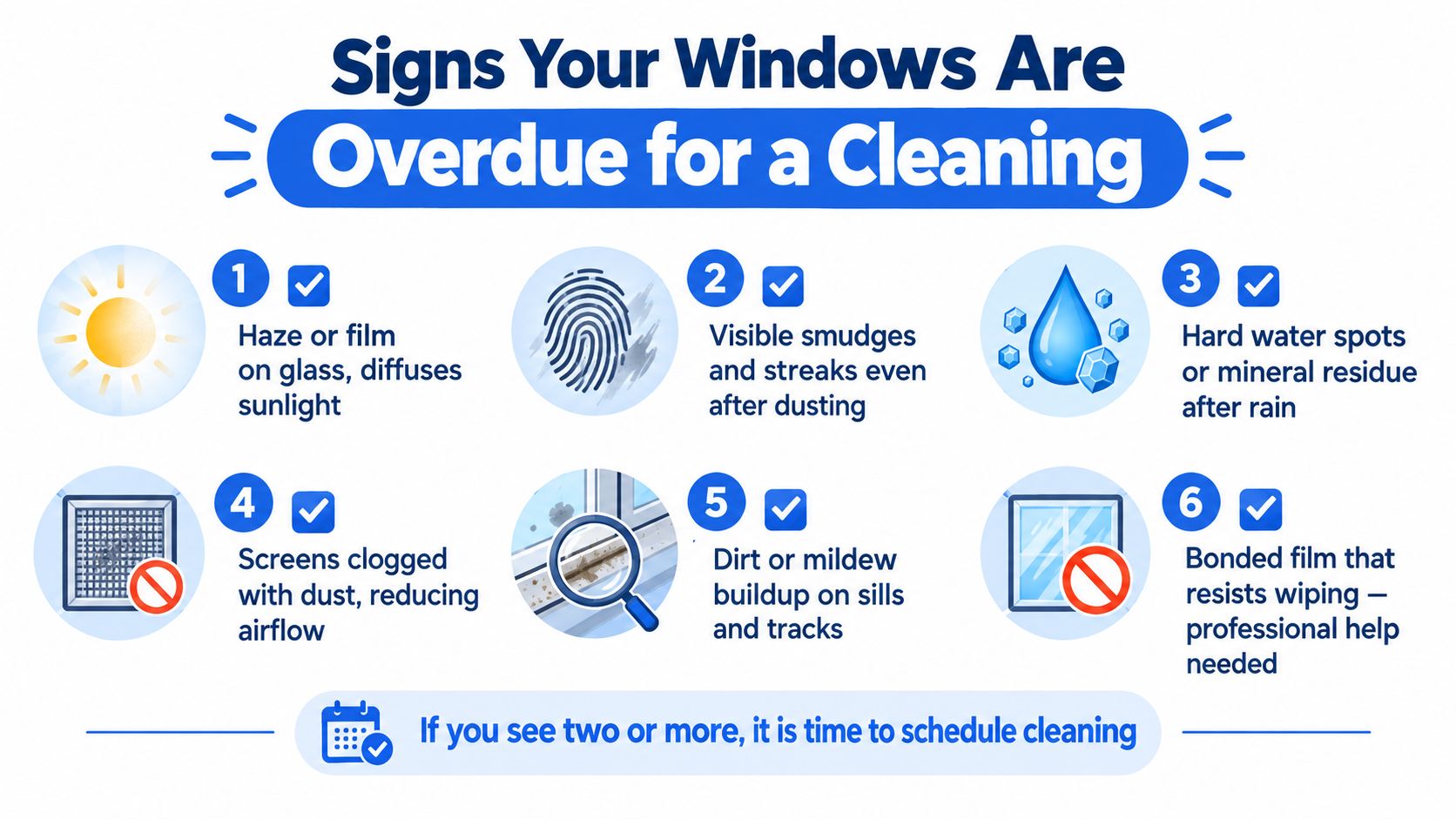
That dull look usually shows up before windows look obviously dirty. Glass rarely jumps from clear to grimy overnight. It collects a thin layer at a time, much like a windshield that looks fine until low-angle sun hits it and suddenly every speck shows up.
The early clues homeowners tend to miss
Start with the light, not the dirt. If daylight looks flat, hazy, or slightly yellowed near a window, a film is often building on the surface. You may notice it first on white trim, kitchen counters, or a favorite chair by the glass.
A quick wipe test can confirm it. Rub a small corner with a clean microfiber cloth. If that patch looks noticeably clearer than the surrounding pane, you are dealing with surface film, not just a few random dust spots.
In Ventura and Santa Barbara counties, the pattern of that film often points to the cause. Coastal homes may get a faint sticky haze from salt in the air. Inland homes often collect a dry, powdery layer after wind. Lower panes near sprinklers can show dots or cloudy rings from mineral residue.
Watch for signs like these:
- Morning glare that looks milky at an angle
- A clean room that still feels visually dull near the windows
- Screens that look gray, fuzzy, or packed instead of open
- Tracks that feel sandy when you slide the window
- Lower glass with dots, rings, or crusty spotting near irrigation
- Light rain that leaves the window looking worse instead of better
Why waiting changes the kind of cleaning you need
Fresh buildup behaves like loose dust on a bookshelf. It lifts off fairly easily.
Older buildup acts more like residue on a shower door. It hangs on, grabs the next layer, and takes more work to remove. That is why a window can look “off” even after a quick wipe. The issue is no longer just surface dirt. It is film, salt residue, or mineral spotting that has had time to sit.
The same idea shows up in routine home maintenance advice from the Glass Doctor window cleaning guide. The longer residue stays put, the harder it is to clean well, especially when minerals or environmental contaminants are involved.
Check your windows after local trigger events
You do not need a detailed inspection. A simple walkaround from normal standing distance usually tells the story.
Use these triggers as your cue to look closer:
- After Sundowner or Santa Ana wind: fine grit tends to collect first along edges and corners
- After sprinkler overspray: new hard-water spots are easier to remove before they bake on
- After the first light rain on dusty glass: streaks often reveal buildup that was hard to see before
- After landscaping, roof work, or nearby construction: screens and sills can load up fast
- After a stretch of salty marine air near the coast: exterior panes may feel tacky or look lightly smeared in sun
A simple rule helps. If you can see the buildup from a few steps back, or if the glass, screens, and tracks are all showing it at once, the cleaning is overdue.
Seasonal Window Cleaning Calendar for Ventura and Santa Barbara Counties
A local schedule works best when it follows weather patterns instead of a generic national reminder. In this area, the useful question isn’t just “spring or fall?” It’s what season brings the kind of buildup your home gets.
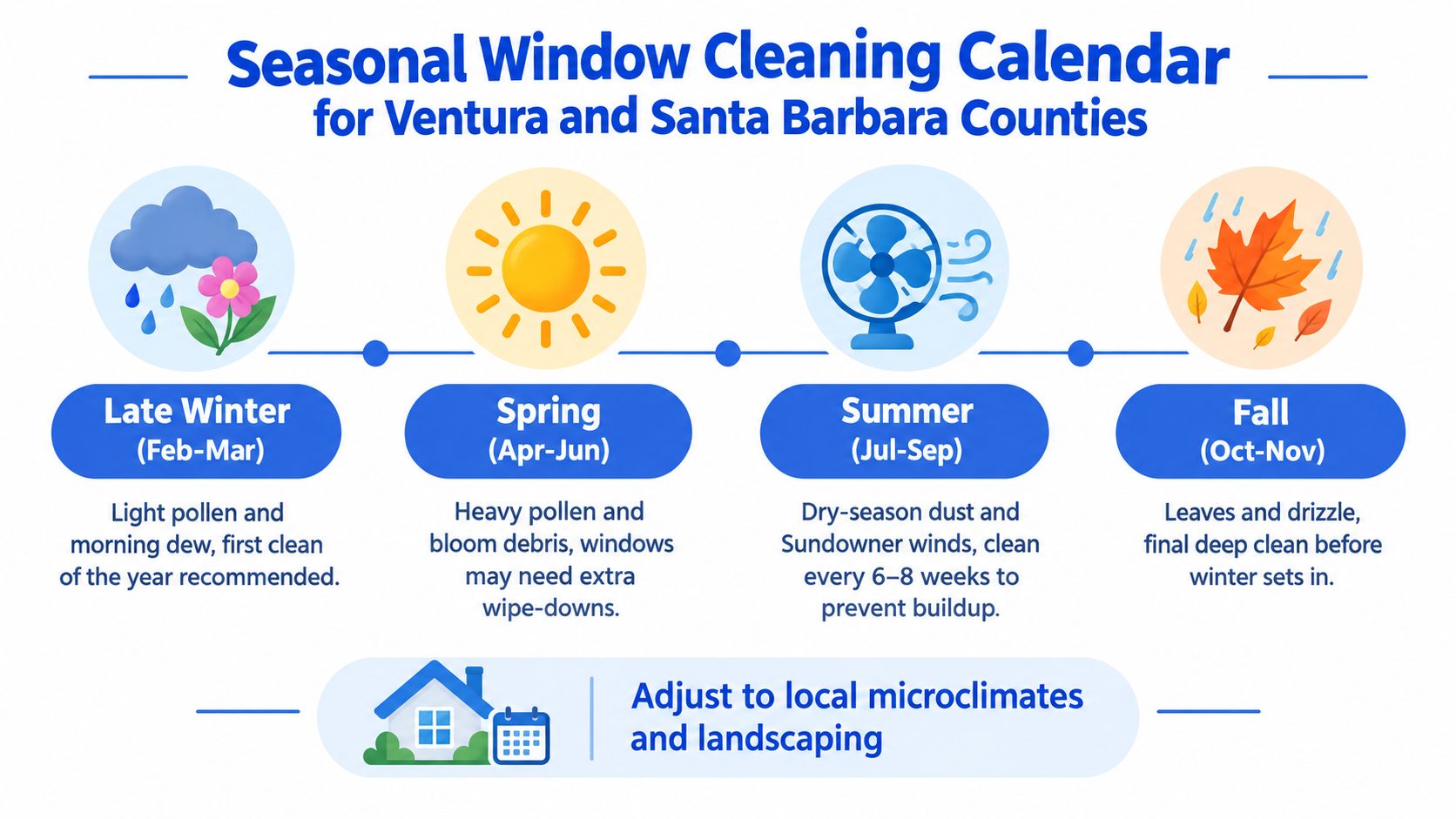
Late winter and spring
Late winter into early spring is a smart first cleaning window for many homes. You clear away residue from wetter months and get ahead of pollen before it stacks up.
For homes that collect debris early, this is often the clean that resets everything:
- Exterior glass to remove winter film
- Screens before pollen loads them up
- Tracks and sills where damp dirt likes to settle
If you want a more local timing reference, this guide on window cleaning in Ventura CA shows how microclimate and neighborhood conditions can shift the ideal booking window.
Summer and wind season
Dry months bring a different problem. Dust doesn’t always look severe right away, but it builds on exteriors and gets caught in screens. Wind-prone areas often need shorter intervals during this stretch than they do in cooler months.
Inland and foothill properties often benefit from a check-in cleaning before the grime gets baked onto the glass.
Homes near the coast often respond best to event-based cleaning. Homes inland often respond best to wind-season cleaning.
Fall and first-rain timing
Fall is the other obvious anchor point, but not for the reason many people think. It isn’t only about leaves. It’s about what happens when the first moisture hits a dusty pane. Light drizzle or morning dampness can turn a layer you barely noticed into visible streaks.
A practical local rhythm looks like this:
| Season | What to Watch | Common Cleaning Focus |
|---|---|---|
| Late winter to early spring | Residue from wetter months, early pollen | Full exterior reset, screens, tracks |
| Spring to early summer | Pollen, bloom debris, growing film | Glass touch-up if exposure is high |
| Summer into dry wind periods | Dust, grit, screen loading | Exterior and screen cleaning on shorter intervals |
| Fall before wetter weather | Dust streaking, leaf debris, seasonal reset | Deep clean before winter |
For commercial spaces, the rhythm compresses, and scheduling follows weather and exposure rather than a fixed annual habit. That same logic works for homeowners too. If a storm, wind event, or heavy pollen period just rolled through, the “right” time may be sooner than the date on your calendar.
Simple Maintenance Tips and What to Expect From Professional Service
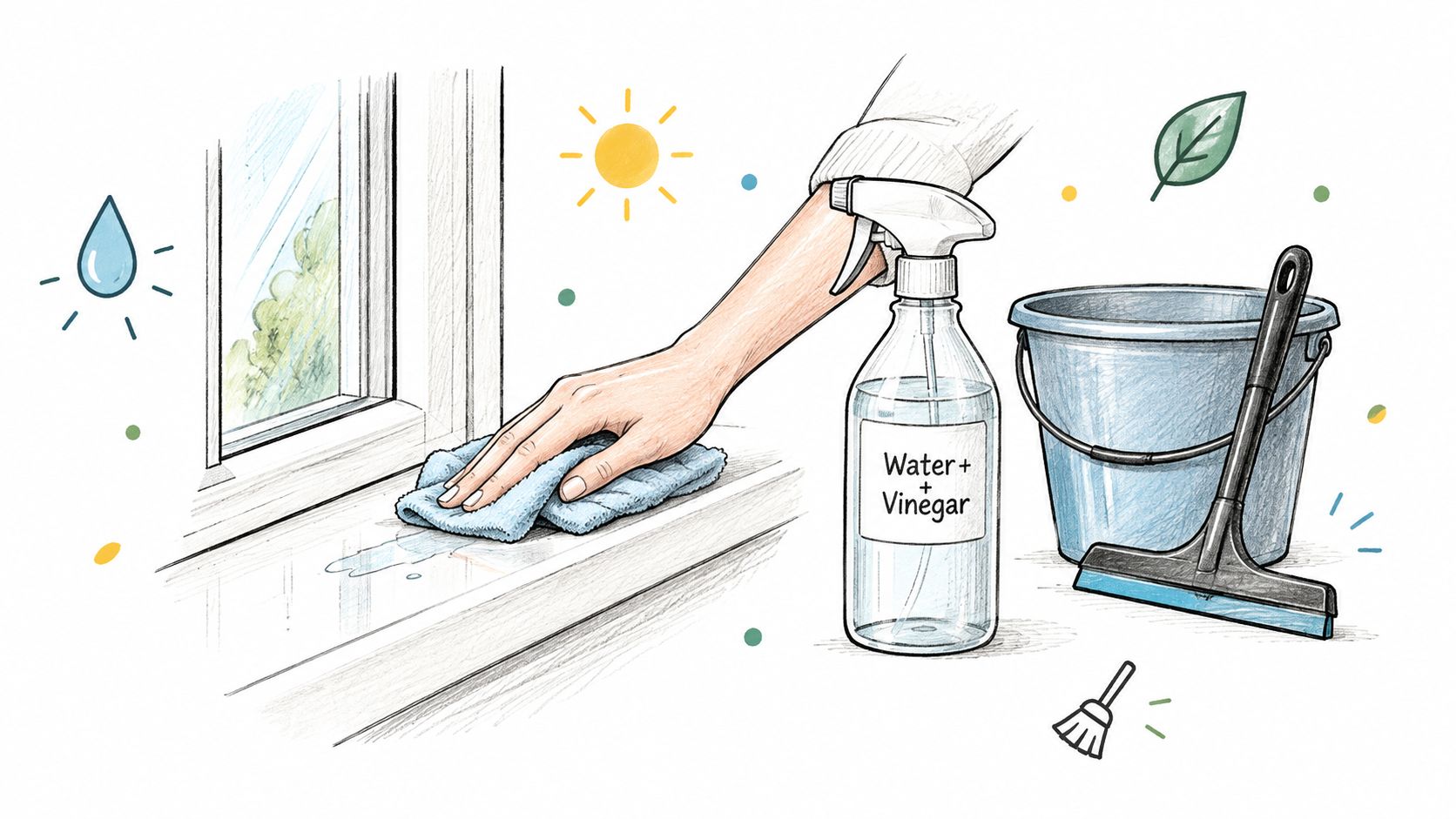
Between professional visits, small habits make a real difference. Not because they replace a full cleaning, but because they slow the kind of buildup that turns easy maintenance into stubborn residue.
Smart upkeep between visits
You don’t need a full DIY setup to help your windows stay cleaner longer.
- Wipe sills and tracks lightly: Dry dust becomes muddy grime once moisture hits it, so vacuum first (sill and track cleaning, step by step).
- Watch sprinkler overspray: If a lower pane keeps spotting, fixing the spray pattern helps more than wiping the glass again.
- Rinse screens gently when needed: Dirty screens can make clean glass still look dingy from inside.
- Use the right cloth: A clean microfiber cloth is safer than old paper towels that can smear residue around.
For high panes, skylights, or hard-to-reach glass, this is usually where DIY starts to lose value. Purified water systems and water-fed poles help remove residue without leaving mineral traces behind. If you’re curious how that works, Aloha Window Bros has a useful explainer on purified water window cleaning.
What a professional visit should include
A proper service shouldn’t focus on the pane alone. The whole window system gets dirty together.
Aloha Window Bros, for example, provides a four-in-one visit that covers windows, screens, frames, and sills, along with free on-site or virtual estimates, fully insured service, and a walk-through before the crew leaves. For budgeting, the company publishes a residential band of $150 to $475 across its service area: $150 to $400 in Thousand Oaks, $175 to $425 across most of the Conejo Valley and Ventura, and $200 to $475 in Ojai and Santa Barbara (full price breakdown).
That wider approach matters because clean glass next to dusty screens or gritty tracks still looks unfinished.
When clean windows matter for resale
Homeowners prepping a property for market often underestimate how much small maintenance details affect first impressions. Clean windows don’t just photograph better. They also change how bright and cared-for a home feels in person.
If you’re maintaining your home for everyday living, the same logic still applies. Better light, cleaner airflow through washed screens, and less visible residue around the frames all make the house feel more settled.
Choosing the Right Cleaning Interval for Your Home or Business
The best schedule is the one that fits your property, not the one that sounds tidy on paper.
Start simple. If your home is protected and lightly exposed, a twice-yearly rhythm is a practical baseline. If you’re dealing with salt air, heavy pollen, roadside dust, or regular windblown grit, move shorter. If your glass is public-facing, highly visible, or part of a storefront, shorten it again.
A quick decision framework
- Choose the baseline: Start with spring and fall for standard homes.
- Adjust for location: Coastal exposure often needs much tighter timing than inland neighborhoods.
- Adjust for events: Wind, nearby construction, and the first moisture on dusty glass can all move a cleaning forward.
- Adjust for visibility: Front-facing windows and business glass usually need more frequent care than side or rear panes.
For homeowners who want a practical next step, compare your expected cadence with local service costs using this guide to residential window cleaning prices. That makes it easier to decide whether your home belongs on a seasonal, quarterly, or event-triggered plan.
If your windows deal with coastal salt, dry wind, pollen, or hard-water spotting, Aloha Window Bros can help you match the cleaning schedule to the way your property gets dirty. They serve Ventura County and Santa Barbara County with window, screen, frame, and sill cleaning, plus free quotes and insured service. To see local service details or request an estimate, visit Aloha Window Bros.