

We grew up here. Westlake High alumni, two brothers, cleaning windows for our Thousand Oaks neighbors with the spirit of aloha and a 100% satisfaction guarantee.
Thousand Oaks is our home base. We started Aloha Window Bros to bring honest, professional window cleaning to the Conejo Valley, the place we grew up. From the older neighborhoods around Conejo Park to the newer Lang Ranch hillside builds, we know the dust, the sun exposure, and the hard water that Thousand Oaks homes deal with every season. Whether you're looking for window washing Thousand Oaks neighbors recommend or a full window cleaning service, it's the same complete job from us: exterior and interior glass, screens, frames, and sills. Most full-home services run $150 to $400 depending on size, with free on-site estimates.
Every neighborhood has its own conditions. Here's what we plan around when we clean your home.
Fall and winter Santa Anas drive fine particulate from the surrounding canyons onto windows, especially on north- and east-facing glass in Lang Ranch, Wildwood, and the hills near Sunset Hills.
California American Water supplies Thousand Oaks, and its 2025 water quality report puts total hardness at 140 mg/L, about 8.2 grains per gallon, on the State Water Project supply that makes up 94% of the city. Hard, but not very hard. The damage comes from how often sprinklers hit the glass, not from an extreme mineral load.
Sitting inland of the Conejo Grade at roughly 890 feet, Thousand Oaks gets far less overnight marine layer than Oxnard or Ventura. Sprinkler water evaporates on the glass instead of staying damp, so minerals concentrate and bake onto south- and west-facing panes.
The namesake oaks drop pollen and tannins each spring that settle on screens and lower window panes, blocking views and clogging screen mesh.
Thousand Oaks is the only city we serve that is built around its wildland rather than beside it. The Conejo Open Space Conservation Agency counts 15,334 acres of protected open space inside Thousand Oaks city limits and its planning area, and manages more than 12,700 of them along with over 150 miles of trails. The practical consequence for your windows is that the material landing on the glass is dry inland dust, oak pollen, and grass seed arriving from a few hundred feet away, not the salt film that sets cleaning schedules in Oxnard and Ventura.
Most window cleaning advice written for Southern California assumes the homeowner lives in continuous suburb with a park nearby. Thousand Oaks is the inverse. The Conejo Open Space Conservation Agency was created in 1977 by a joint powers agreement between the City of Thousand Oaks and the Conejo Recreation and Park District, and the land it protects is threaded through the city rather than fenced off at the edge of it. That is why so many homes in Wildwood, Lang Ranch, Sunset Hills, and the neighborhoods along the Conejo Canyons have chaparral or dry annual grass within sight of a kitchen window. From roughly May through the first real rain, that ground surface is the single largest contributor to what we wipe off Thousand Oaks glass: fine mineral dust, oak pollen, and grass seed heads that lodge in screen mesh rather than blowing through it. Homes with a direct open space edge on their north or east side are the ones we most often move onto a quarterly schedule.
Search for Thousand Oaks water hardness and the first answers you will find come from water softener retailers quoting figures near 12.8 grains per gallon and the label "very hard." The utility's own testing does not support that. California American Water serves Thousand Oaks and Newbury Park under PWS ID CA5610040, and its 2025 Consumer Confidence Report gives total hardness as calcium carbonate for each source in the blend: 140 mg/L, or 8.2 grains per gallon, from the Metropolitan Water District Jensen treatment plant, which is 94% of the supply; 164 mg/L, or 9.5 grains per gallon, from the Calleguas Lake Bard Water Filtration Plant at 5%; and 146 mg/L, or 8.5 grains per gallon, from the Calleguas Las Posas Wellfield at 1%. On the Water Quality Association scale that is "hard," one full class below "very hard." We say this plainly because it changes the advice: at this hardness, a spot on your window is a story about evaporation and sprinkler aim, not about needing to treat your whole house.
Thousand Oaks sits at roughly 890 feet above sea level, inland of the Conejo Grade, the climb on Highway 101 that separates the Conejo Valley from the Oxnard Plain. That grade is a real weather boundary and not just a hill. Marine layer that sits on Oxnard, Ventura, and Camarillo glass overnight often stops short of the valley, so Thousand Oaks windows go through fewer damp-then-dry cycles than coastal windows do. Two things follow. First, dust here stays loose for longer instead of bonding into a film, which is why a Thousand Oaks home can look acceptable for months and then look filthy within a week of one Santa Ana event. Second, when sprinkler water does hit the glass, inland summer heat evaporates it quickly and leaves the minerals behind in a concentrated ring rather than rinsing them off. The National Weather Service Los Angeles and Oxnard office tracks the Santa Ana pattern that drives the first effect, and those winds are most common in the cooler half of the year, roughly September into spring.
We clean every Thousand Oaks job with reverse osmosis purified water, which carries no dissolved minerals and therefore cannot leave a spot of its own as it dries. That matters more here than the tap hardness number suggests, because the problem is repetition: moderate-hardness water applied by a sprinkler four mornings a week still builds a visible deposit. We pull and wash screens before the glass rather than after, since oak pollen and grass seed load the mesh and will re-deposit onto clean panes the first time the wind comes up. Upper stories in Lang Ranch, North Ranch, and the Sunset Hills grades are done with water-fed pole systems instead of ladders, which is both safer on sloped lots and better on divided-light windows. And we carry proof of insurance for the gate offices and HOA managers at North Ranch Country Club Estates and the gated Lang Ranch neighborhoods, because most of them ask before a first visit.
Where Thousand Oaks water comes from and how hard it is, taken from California American Water's 2025 Consumer Confidence Report for PWS ID CA5610040. Percentages are each source's share of the city supply.
| Source | Share of supply | Total hardness (as CaCO3) | Total dissolved solids | What it means for your glass |
|---|---|---|---|---|
| MWD Jensen plant (State Water Project) | 94% | 140 mg/L (8.2 grains per gallon) | 297 ppm (293 to 301) | The supply almost every Thousand Oaks home is actually on. Hard enough to spot with repeated overspray, a full class below very hard. |
| Calleguas Lake Bard plant | 5% | 164 mg/L (9.5 grains per gallon) | 437 ppm (400 to 470) | The hardest source in the blend and by far the highest dissolved solids, so it leaves the most visible residue when it dries. |
| Calleguas Las Posas wellfield | 1% | 146 mg/L (8.5 grains per gallon) | 325 ppm (290 to 360) | Local groundwater, used sparingly. Slightly harder than the imported supply it supplements. |
Sources: California American Water, 2025 Consumer Confidence Report, Thousand Oaks (PWS ID CA5610040) , Conejo Open Space Conservation Agency , Conejo Open Space Conservation Agency trail system , National Weather Service, Los Angeles and Oxnard forecast office , City of Thousand Oaks
Professional residential cleaning for every part of your window system, plus your solar panels and gutters.
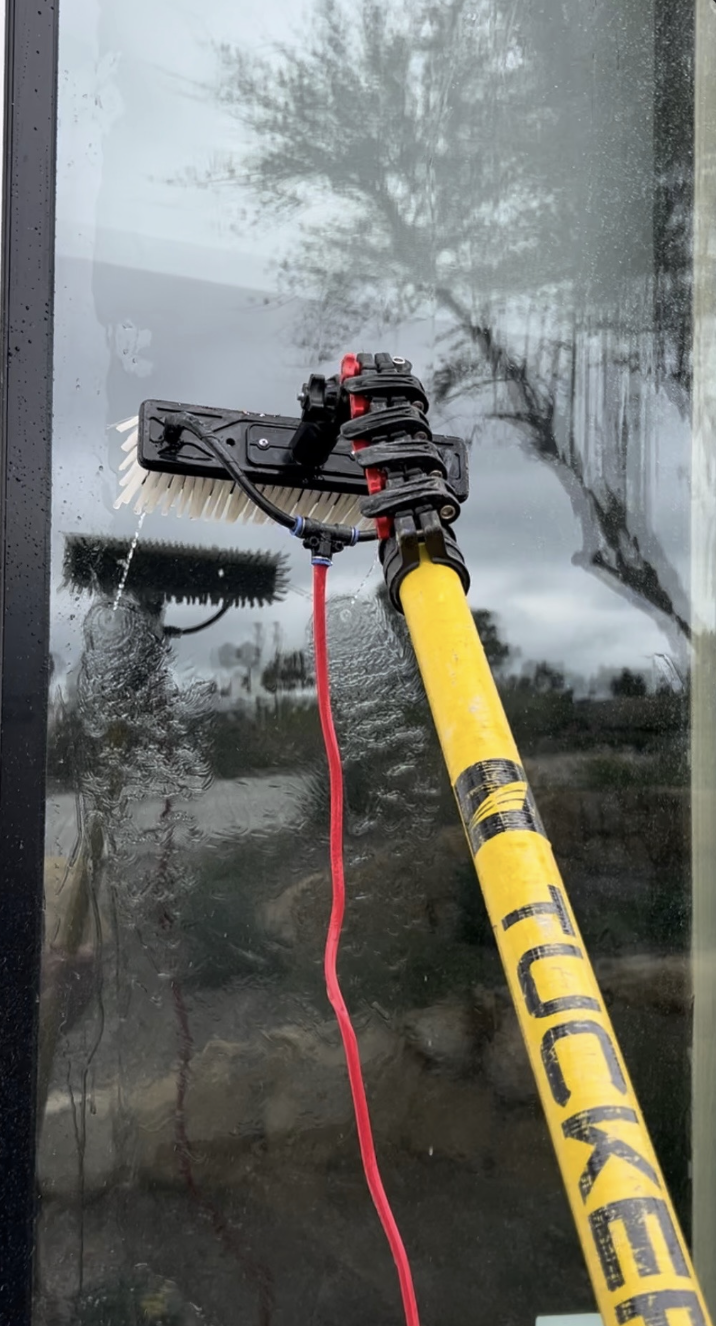
Exterior + interior glass, frames, and sills. Purified water for zero spotting.
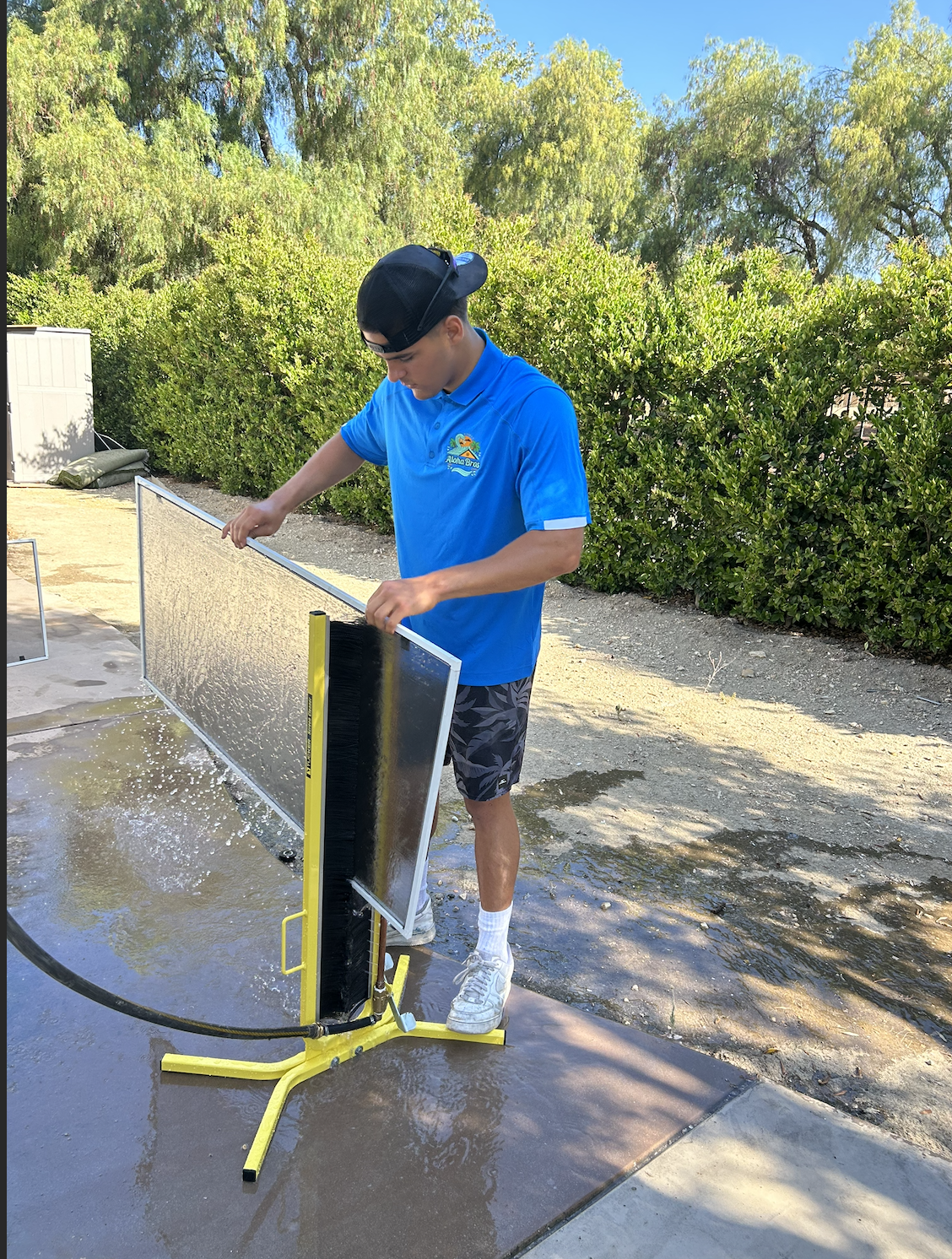
Pressurized wash that lifts dust, pollen, and grime from every screen.
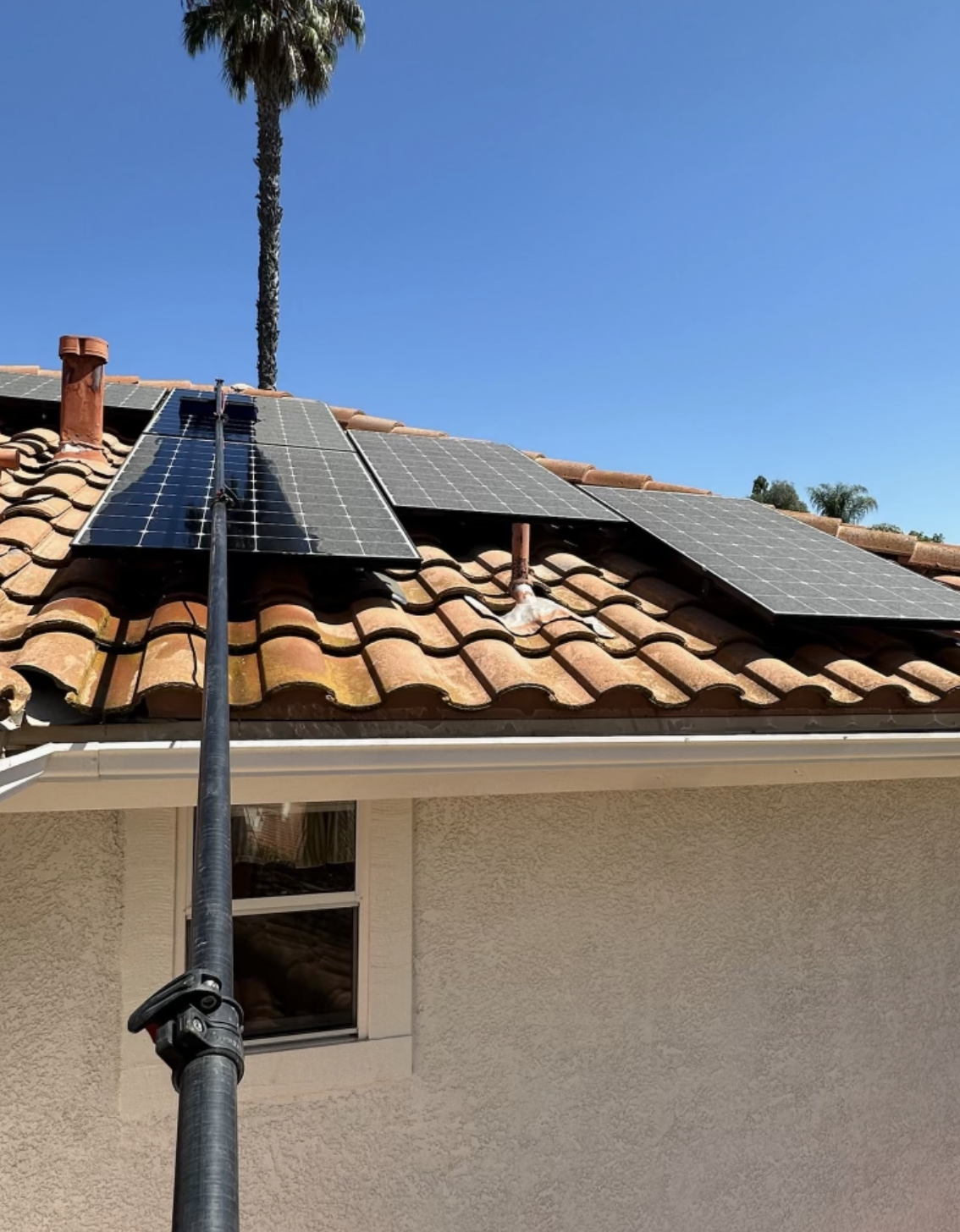
Restore lost production from dust, ash, and bird droppings.
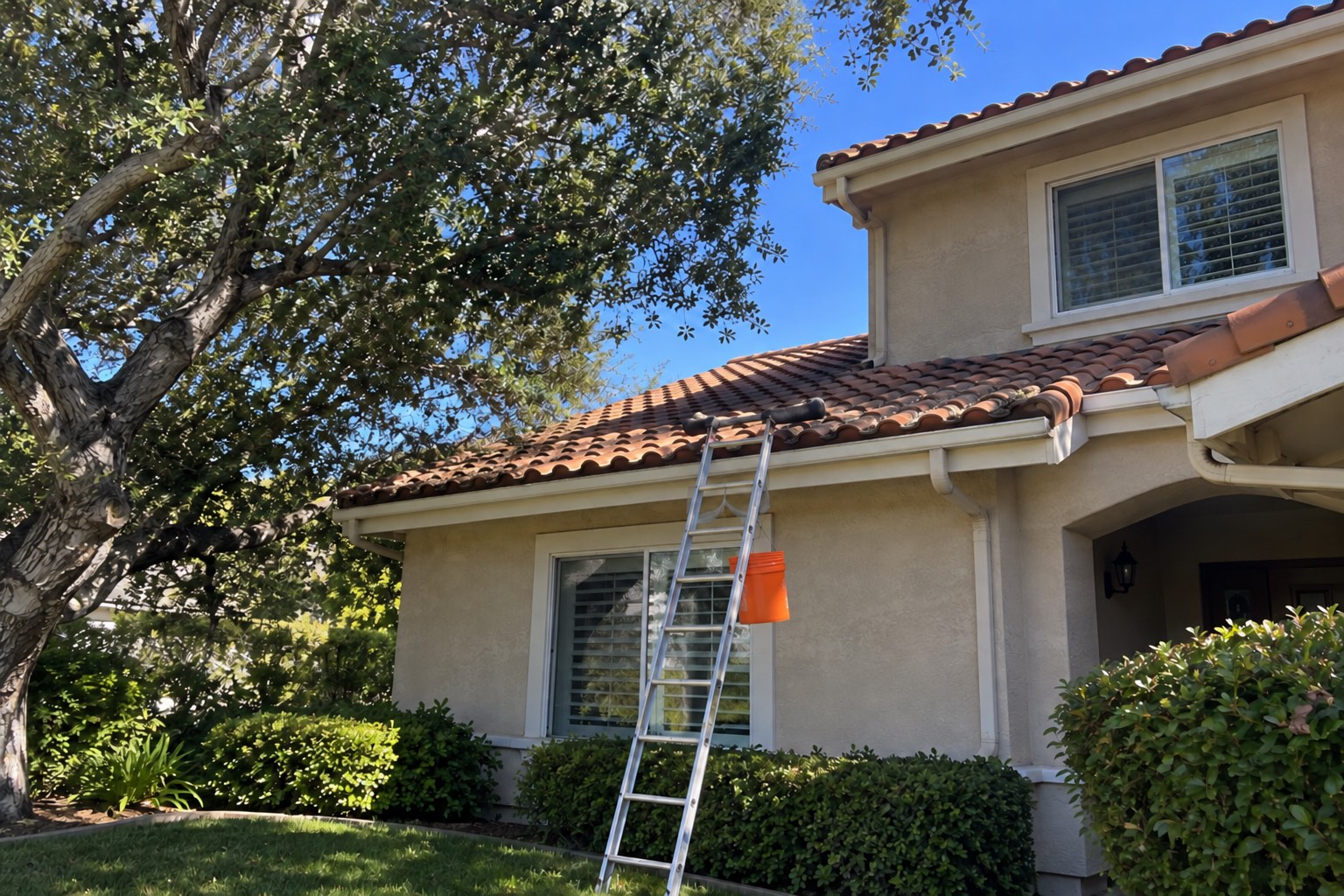
Troughs and downspouts in Thousand Oaks cleared before the rain season, so winter storms drain where they should.
We grew up in the Conejo Valley, so we know these streets. Below is where we work most often.
Three steps from "I want clean windows" to crystal clear glass
Schedule online or call. We'll drive out to your Thousand Oaks home and assess everything, no obligation.
Our team arrives on time with professional-grade tools. Windows, screens, frames, and sills, all spotless.
We walk the property with you before we leave. Not happy? We redo it on the spot, 100% guaranteed.
We wrote a complete homeowner's guide to Thousand Oaks: pricing tables, frequency recommendations, neighborhood breakdown, and what makes this area different.
Common questions from Thousand Oaks homeowners
Most Thousand Oaks homes fall between $150 and $400 for a full residential window cleaning. Pricing depends on home size, window count, accessibility, and whether you want screens, frames, and sills included. We give free on-site estimates, no obligation, usually within 24 hours.
For most Thousand Oaks homes we recommend every 3 to 4 months. Hillside homes in Lang Ranch or Sunset Hills that face Santa Ana wind corridors typically need quarterly service. Interior-protected homes with shaded exposure can go 6 months between cleanings.
Yes. We use water-fed pole systems for upper-story windows, which is safer than ladder work and gets a streak-free result. Many Thousand Oaks homes, especially in North Ranch and Lang Ranch, are two-story properties, and we clean them regularly.
Our standard service includes the exterior glass, interior glass, screens, frames, and sills, a complete four-in-one clean. We also offer solar panel cleaning as an add-on, which is popular in Thousand Oaks given the high solar adoption rate.
Yes, we're fully insured and we're a familiar service in most Thousand Oaks gated communities, including North Ranch Country Club Estates and the gated Lang Ranch neighborhoods. We can provide proof of insurance to your HOA on request.
Yes, window washing and window cleaning are the same professional service. Our window washing in Thousand Oaks covers exterior glass, interior glass, screens, frames, and sills, finished with purified water so sprinkler overspray doesn't re-spot the glass. Some companies use "washing" to mean a quick exterior-only rinse; ours is always the complete four-in-one service.
Hard, but not very hard, and the difference matters. California American Water serves Thousand Oaks and Newbury Park under PWS ID CA5610040, and its 2025 Consumer Confidence Report reports total hardness of 140 mg/L, about 8.2 grains per gallon, on the Metropolitan Water District Jensen supply that provides 94% of the city. The two Calleguas sources in the blend measure 164 mg/L (9.5 grains per gallon) and 146 mg/L (8.5 grains per gallon). Water softener retailers commonly quote a much higher figure and call Thousand Oaks water very hard; the utility's own testing does not support that. For window cleaning the practical takeaway is that spotting here comes from how often sprinklers reach the glass and how fast the water evaporates, not from an extreme mineral load.
Usually because the dust source is closer than you think. The Conejo Open Space Conservation Agency protects 15,334 acres of open space inside Thousand Oaks city limits and its planning area, so a large share of homes here sit within a few hundred feet of dry chaparral or annual grass. From late spring until the first real rain, that ground surface sheds fine dust, oak pollen, and grass seed onto glass and into screen mesh, and a single Santa Ana event can undo weeks of clean appearance overnight. Homes with an open space edge on the north or east side usually need quarterly service, while interior lots on the valley floor hold up for 4 to 6 months.