

The storefront opens soon, and your crew is facing a long run of ground-floor glass with a high transom above the entrance. The lower panes carry fingerprints and roadside dust. Higher up, a pale film could be coastal salt, dried sprinkler water, or dirt washed down from the frames.
Grab the wrong setup and you’ll spend the morning moving equipment, chasing drips, or trying to reach glass from an awkward position. The right commercial window cleaning tools match the contamination and the access, not just the brand already in the van. A squeegee can finish accessible glass neatly, while a water-fed pole can clean reachable exterior panes without putting a worker on a ladder.
Traditional hand tools give you direct control over scrubbing, water removal, and edge detailing. Purified-water systems suit exterior washing and rinsing, but they require clean brushes, maintained filtration, and somewhere safe for runoff to go.
Match the tool to what’s on the glass
Coastal salt needs thorough washing and rinsing, including contaminated frames. Inland windborne dust needs removal without dragging grit across the surface. Sprinkler spotting needs diagnosis because washing loose deposits isn’t the same as restoring etched glass.
Technique still matters. Structured skills training for aspiring cleaning professionals is a useful complement to equipment, especially for pole control, squeegee work, and recognizing surfaces that shouldn’t be scraped.
Table of Contents
- Match the tool to what’s on the glass
- 1. UNGER Professional Window Cleaning Kit
- 2. Ettore Professional Window Cleaning Kit with Carrying Case
- 3. Sörbo Professional Squeegees and Traditional Tools
- 4. Tucker RIVAL-v2 Water-Fed Pole System
- 5. XERO Ultimate Commercial Kit
- 6. IPC Eagle HydroCart Pure-Water Systems
- 7. Pure Water Power Poles and RO/DI Systems
- 8. WaterFed / abc Window Cleaning Supply
- How the Commercial Window Cleaning Tools Compare on Setup, Price, and Best Use
- Building a Tool Stack Around Your Site, Crew, and Coastline
1. UNGER Professional Window Cleaning Kit
For an accessible storefront with fingerprints, dust, and dirty lower frames, a coordinated traditional kit is a sensible starting point. The UNGER Professional Window Cleaning Kit brings the washing and finishing tools together rather than making a maintenance manager assemble everything separately.
The UNGER Professional Window Cleaning Kit listing includes ErgoTec washing and squeegeeing tools, a scraper, microfiber cloth, bucket, cleaning solution, and a pole extending to about 6 feet, but doesn’t display a price. Sales go through qualified distributors, so request the exact contents and delivered price before comparing it with another kit.
Best for reachable glass and controlled detailing
Use the washer to loosen dirt, the squeegee to remove the dirty solution, and a separate clean cloth for the perimeter. On a dusty inland storefront, change contaminated wash water rather than repeatedly carrying grit from pane to pane. Keep the cloth used on frames away from the cloth used for final glass detailing.
- Good fit: Storefronts, office interiors, entry doors, and maintenance teams that need a coordinated basic setup.
- Useful advantage: Replacement components let you maintain the working tools instead of replacing the entire kit.
- Site limitation: The supplied pole offers modest reach, not a high-exterior access solution.
The scraper deserves particular caution. Its presence in the bucket doesn’t mean every glass surface is suitable for a blade. Identify coatings, films, and manufacturer restrictions before using it, and don’t treat scraping as the automatic answer to sprinkler spots.
I’d choose this kit for a team doing routine accessible glass, provided the distributor quote is competitive. For high transoms, first establish whether the pole gives the operator a stable working angle without stretching or leaning.
2. Ettore Professional Window Cleaning Kit with Carrying Case
Moving between small commercial properties creates a different problem: keeping the right channel, spare rubber, and scraper together. Ettore’s carrying-case kit suits route work where organized transport matters almost as much as the tools themselves.
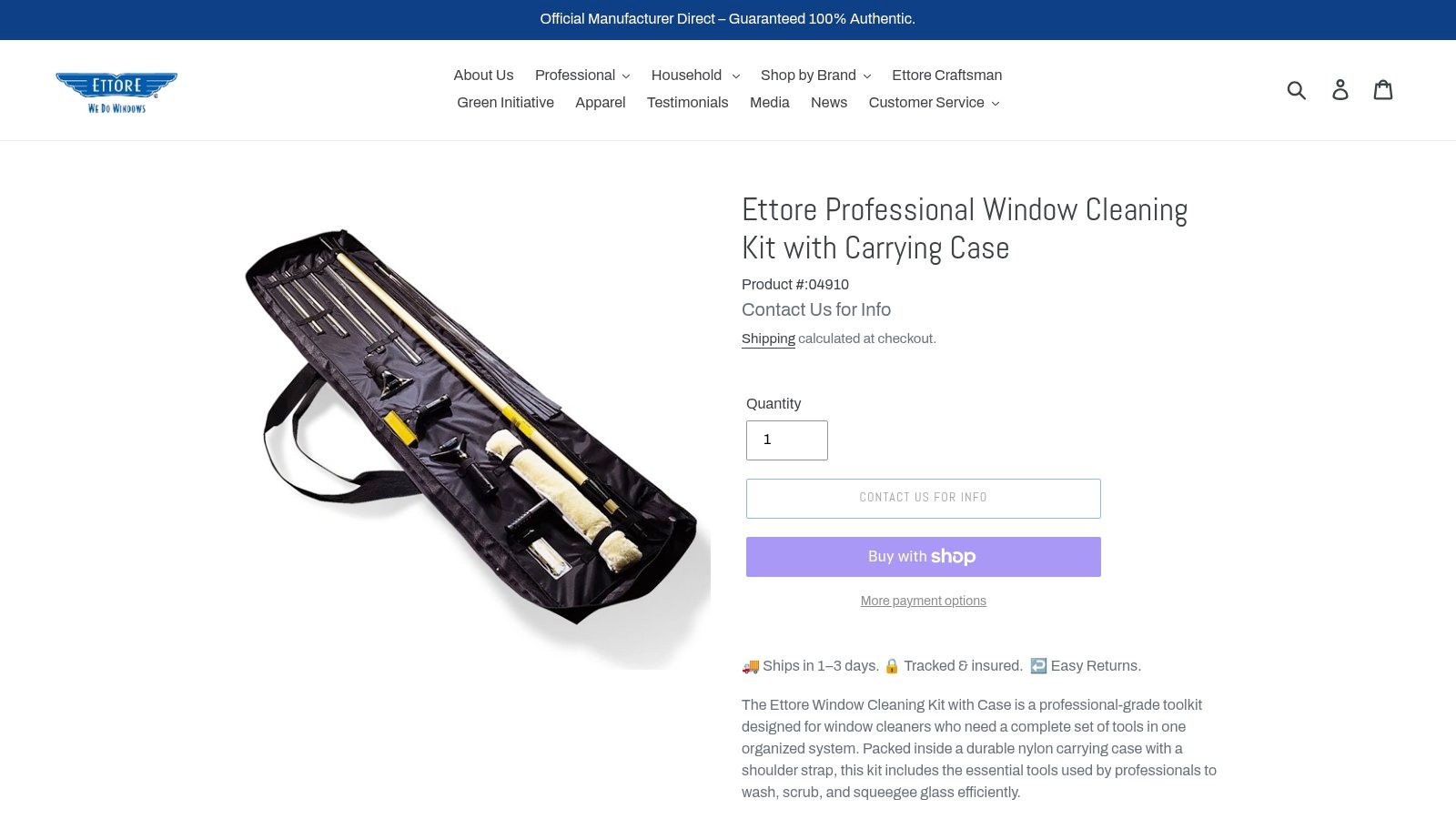
The Ettore kit listing shows a price of $406.50 and includes stainless-steel channels, a quick-release handle, washer, scraper, replacement rubbers, carrying case, shoulder strap, and an 8-foot extension pole. Shipping is calculated at checkout, so the displayed price isn’t the complete delivered cost.
Choose it for mixed pane sizes
A route might include broad display windows, narrow door panes, and an interior partition. Different channel sizes help you avoid forcing a wide squeegee into a narrow opening or making unnecessary passes with a small one. The case also makes missing components easier to spot before departure.
Route-work rule: Store clean finishing cloths separately from wet washers and dirty frame towels. An organized case doesn’t help if everything inside contaminates everything else.
The trade-off is that you’re buying organization and a broader traditional selection, not purified-water capability. The extension pole still requires sound technique to wash and squeegee higher glass without leaving missed edges.
Best setup: A mobile cleaner handling varied, mostly accessible commercial panes. Main limitation: This costs more than a stripped-back washer-and-squeegee purchase, and the included reach equipment doesn’t replace a site-specific access plan. Dry the equipment before closing it away, and protect spare rubber edges from being bent or nicked in transit.
3. Sörbo Professional Squeegees and Traditional Tools
Broad storefront glass rewards a squeegee that matches the pane and the operator. Sörbo makes more sense for someone building a preferred working setup than for a buyer who wants a single box containing everything.
The Sörbo shop lists complete squeegees from about $45, alongside scrubbers, replacement rubber, poles, belts, and accessories. That starting price is for a squeegee, not a complete commercial cleaning setup.
Where customization pays off
Long channels suit uninterrupted glass, while swivel tools can help with awkward working angles. Neither feature removes the need for practice. A wider tool demands consistent pressure, and an unfamiliar swivel can make edge control harder until the operator adjusts.
For coastal storefronts, thoroughly loosen and remove salt film before the finishing pass. A premium channel won’t compensate for an overloaded washer or dirty solution. The practical distinctions in choosing and using a window-washing squeegee matter more than buying the longest option available.
- Build around the route: Match channel widths to the panes you clean.
- Carry service parts: Keep compatible rubber and spare components available.
- Budget for the whole setup: Add the washer, bucket, towels, pole, and carrying equipment to the purchase total.
I’d favor Sörbo for an operator who already knows their preferred technique. It’s less straightforward for a facilities buyer trying to equip an inexperienced team without additional instruction.
The limitation you’ll discover on site is maneuverability. A long channel that works well on open display glass can become cumbersome around signs, handles, closely spaced mullions, and narrow returns. Keep a smaller tool available rather than forcing the specialty tool through every part of the job.
4. Tucker RIVAL-v2 Water-Fed Pole System
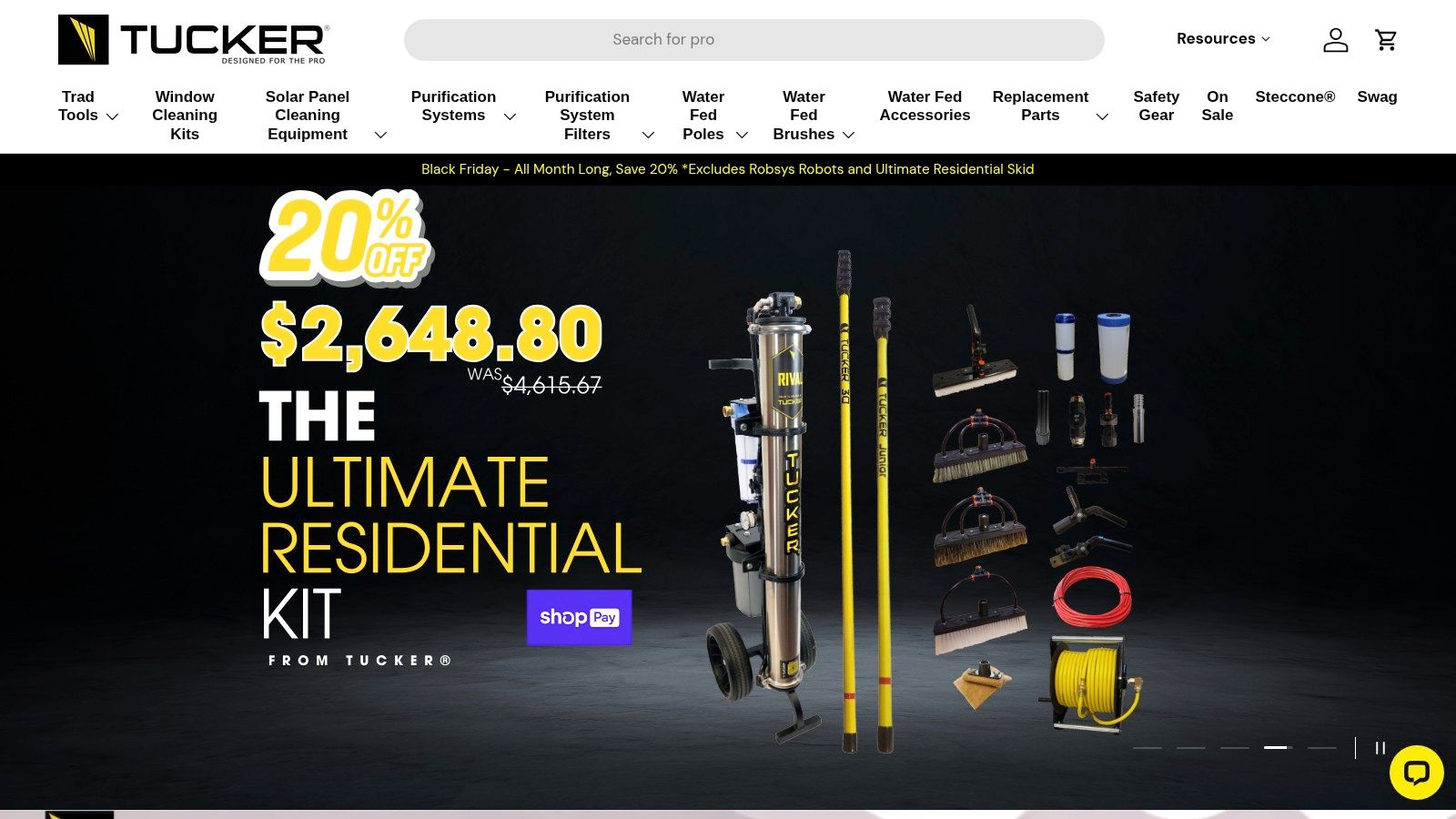
Salt-hazed exterior panes above a planted setback call for a different approach from interior fingerprints. Tucker’s RIVAL-v2 combines purification equipment with water-fed pole components, allowing an operator to wash and rinse suitable exterior glass from a ground-based position.
The Tucker equipment website offers RIVAL-v2 bundles and other professional purification equipment. There isn’t a single fixed price for the range: configuration and availability vary, so obtain a quote that identifies the purification unit, pole, brush, hose, and any additional equipment required.
Best for salt film and reachable exterior glass
The brush agitates contamination while purified water carries it away. Frames need attention too, because dirty upper edges can release residue onto freshly rinsed glass. This explanation of how a water-fed pole system works helps distinguish an integrated setup from attaching a brush to a hose.
Water quality needs measurement. The J. Racenstein TDS guide identifies 0 ppm total dissolved solids as the spot-free target and recommends replacing deionization resin when output reaches approximately 10 ppm.
Purified water doesn’t make contamination disappear. The operator still has to loosen it, rinse it away, and prevent dirty frames from recontaminating the glass.
The RIVAL-v2 approach fits exterior routes where a crew can position the equipment safely and manage hoses without obstructing entrances. It isn’t an automatic solution for etched sprinkler deposits, inaccessible recesses, or glass behind fixed screens.
The practical trade-off is transport and preparation. A filtration unit, pole, and hose occupy more space than hand tools, and setup must be justified by the amount of suitable exterior glass. Keep traditional tools aboard for interiors, tight corners, and final detailing.
5. XERO Ultimate Commercial Kit
A contractor adding substantial exterior work may prefer a broad package over ordering every fitting separately. The XERO Ultimate Commercial Kit suits that purchase strategy, but only when the bundled equipment matches the work already booked or realistically planned.
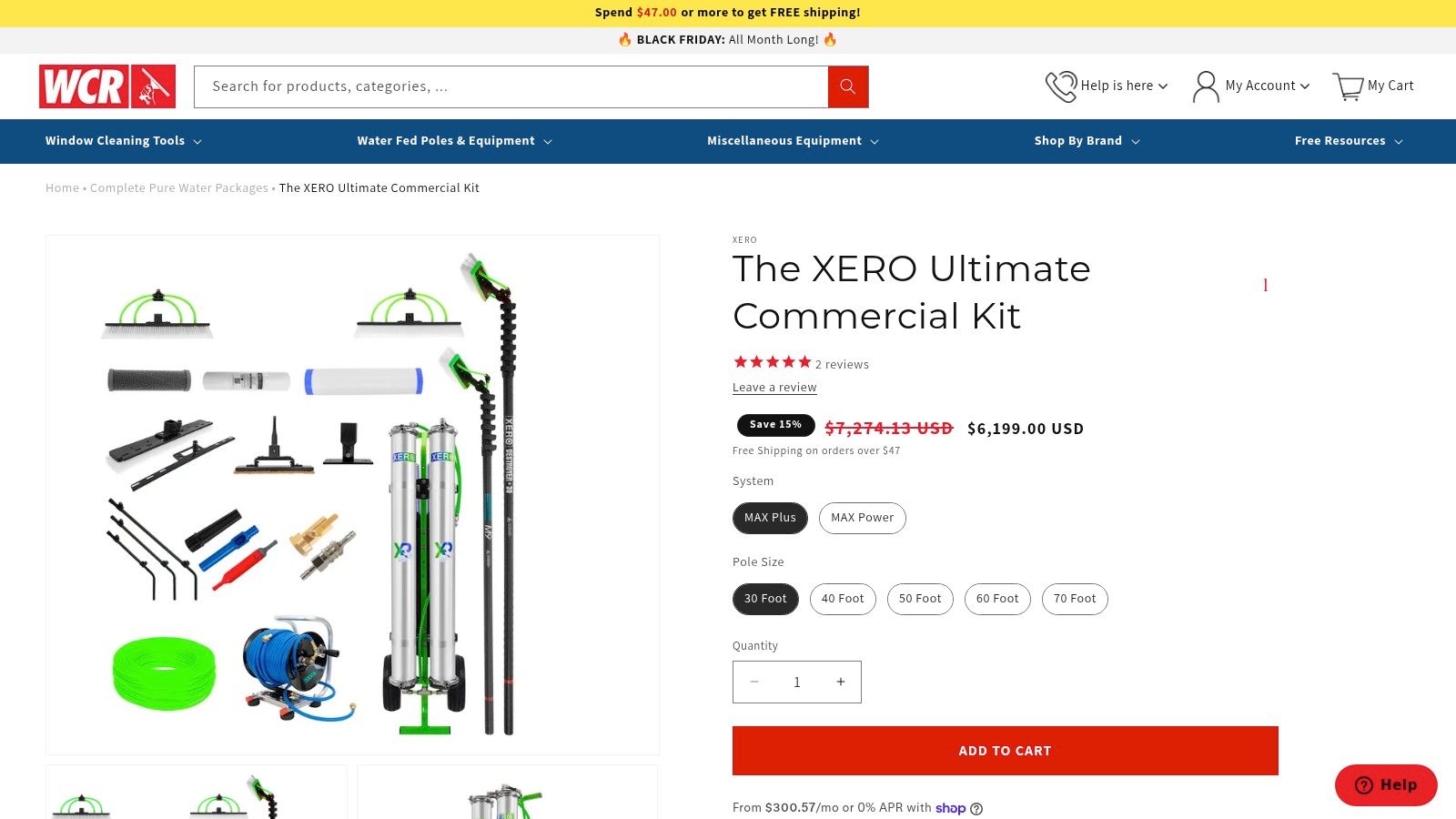
The Window Cleaning Resource listing shows $6,499 for the package and marks it as sold out. Treat that as the listing status, not a promise about availability when you’re ready to order.
Buy the configuration, not the component count
The package combines purification equipment, poles, brushes, hose and reel, replacement filters, and accessories. Its value depends on whether those components suit your water supply, façade access, transport space, and crew. Equipment that stays unused in the van doesn’t improve the job.
- Strong fit: A contractor expanding into regular exterior water-fed work.
- Purchase advantage: Coordinated components can reduce the effort of sourcing a complete system separately.
- Operating burden: The crew still needs filtration maintenance, hose management, setup training, and safe procedures for powered equipment.
For inland buildings, consider how much dust accumulates on upper frames and ledges. Heavy contamination can require more deliberate washing and rinsing than a lightly soiled maintenance clean. A large package doesn’t change that procedure.
The limitation is commitment. Before placing an order, identify which brushes you’ll use, whether the chosen pole remains controllable at the required reach, and where the equipment will be secured during transport. Read the warranty exclusions and claim process rather than treating a headline guarantee as complete protection.
I’d buy this for a defined workload, not speculative expansion. If the route is still dominated by accessible storefront glass, a smaller system plus dependable hand tools may be the more practical purchase.
6. IPC Eagle HydroCart Pure-Water Systems
A facilities team cleaning exterior glazing and occupied interiors needs more than a tall pole. IPC Eagle’s range is worth comparing when the building requires separate approaches for outdoor rinsing and indoor glass maintenance.
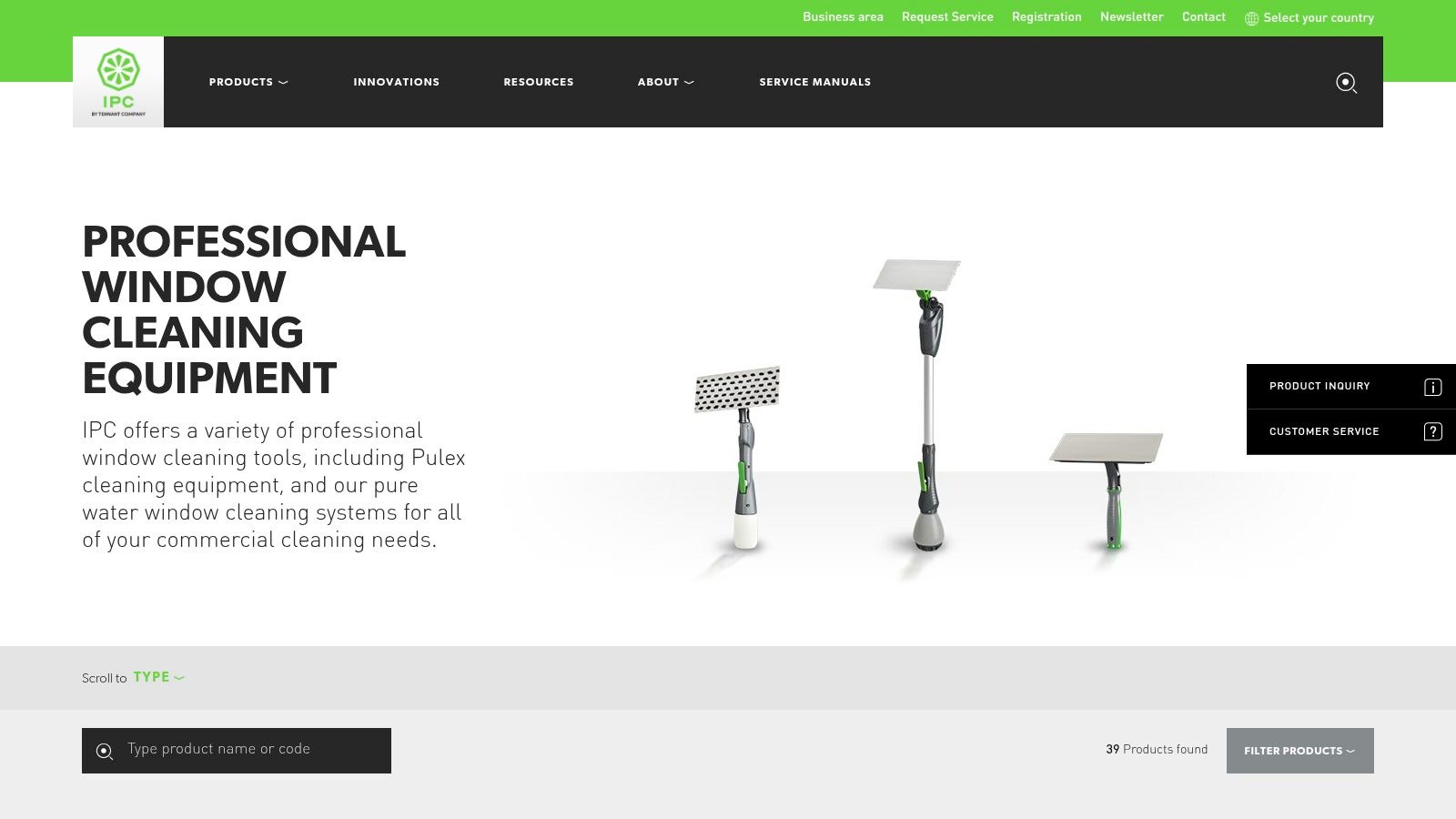
The IPC Eagle professional window-cleaning range includes HydroCart Jr, Compact, and Pro configurations, along with poles, brushes, and Cleano indoor tools. Pricing isn’t consistently displayed on the overview, so request model-specific dealer quotes.
Separate exterior washing from interior maintenance
An exterior pure-water cart and an indoor glass tool solve different problems. Outside, you need agitation, rinse coverage, and runoff control. Inside, you need controlled moisture around flooring, furniture, displays, and electrical equipment.
The principles behind purified-water window cleaning explain why water treatment matters, but purification alone doesn’t establish whether a particular cart fits your property. Check the operating footprint, movement between work areas, and access to a suitable water source.
For an HOA or commercial campus, compare the equipment against the actual route. Narrow gates, steps, planted courtyards, and occupied entrances can make cart handling a significant part of the work.
- Best setup: A maintenance operation comparing portable purification options and separate indoor tools.
- Useful distinction: Related tools are available within the same manufacturer’s range.
- Buyer’s limitation: A broad product family doesn’t mean every model includes the pole, brush, or accessories you need.
Ask the dealer to itemize the quote, including consumables and replacement components. Choose the cart your crew can move and maintain, not only the largest configuration available. A capable unit left behind because it’s awkward to transport won’t help with high glass.
7. Pure Water Power Poles and RO/DI Systems
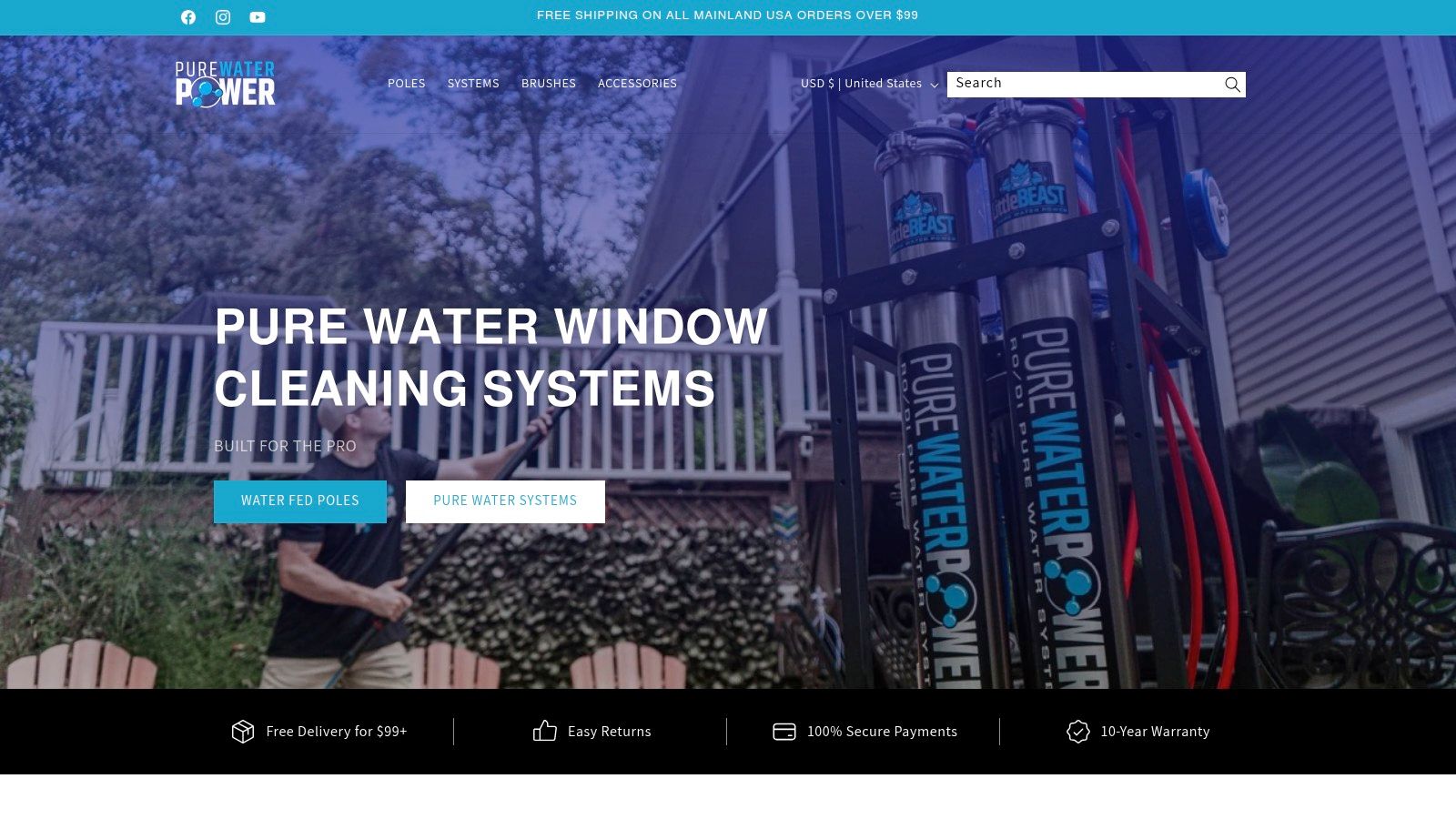
Already own usable brushes and hose? Buying another complete package may duplicate equipment. Pure Water Power offers individual components and packages, making it relevant to operators replacing a pole, adding purification, or expanding a system gradually.
The Pure Water Power catalog lists poles from about $249 and a single RO/DI system at $1,999. These are separate purchasing references, not the price of a complete connected setup.
Best for staged upgrades
Compare pole materials by stiffness, weight, and control at the reach you need. A flexible pole may demand more correction when the brush is extended, especially around recessed panes. A lighter, stiffer option can be useful, but only if its additional cost fits the workload.
Ground-based access deserves serious consideration. UNGER’s ladder-safety guidance explains why telescopic and water-fed poles can reduce ladder exposure, while emphasizing that equipment and site conditions determine suitability.
Buying advice: A pole’s advertised reach isn’t permission to work at that reach in wind, beside overhead electrical hazards, or from an unstable position.
The modular approach works when the buyer checks compatibility before ordering. Confirm hose connections, brush attachment, pole fittings, and the purification system’s operating requirements. Don’t assume parts from different existing setups will connect without adapters or changes.
The limitation is integration responsibility. With a bundle, someone has selected the main components together; with a staged build, you must verify that selection yourself. Include a TDS meter, replacement filtration consumables, safe hose routing, and storage in the purchase plan.
For coastal or inland maintenance, the finished system still needs a sound cleaning procedure. Better pole handling won’t correct exhausted resin, a contaminated brush, or an incomplete rinse.
8. WaterFed / abc Window Cleaning Supply
When several systems appear suitable, a multi-brand retailer can make comparison easier. WaterFed / abc Window Cleaning Supply is a purchasing channel rather than a single cleaning tool, so judge it by the equipment comparison and support it enables.
The WaterFed retailer website carries poles, filtration equipment, brushes, and products from brands including Tucker and UNGER. There’s no single package price to compare: use the published listing for the exact product and confirm its contents before ordering.
Compare complete working setups
For sprinkler-exposed glass, begin by separating routine cleaning from restoration. A pure-water system can wash away loose contamination without adding mineral-heavy rinse water, but it doesn’t necessarily remove bonded deposits or reverse etching. Buying a more expensive pole won’t solve a surface-treatment problem.
Make the retailer comparison specific:
- Complete contents: Establish whether the price includes purification, pole, brush, hose, connectors, and a meter.
- Replacement supply: Check availability of filters, resin, clamps, fittings, and compatible brush components.
- Warranty responsibility: Identify whether the retailer or manufacturer handles faults and returns.
- Delivered cost: Confirm shipping terms for the actual equipment and destination.
The main advantage is choice across brands and price tiers. The limitation is that different products can carry different warranty terms, included accessories, and service arrangements even when sold through the same storefront.
I’d use this retailer to compare complete, like-for-like setups, not to select whichever pole appears cheapest. Send the same description of building access, water supply, and cleaning conditions with each inquiry. A useful recommendation should address those conditions rather than just maximum reach.
How the Commercial Window Cleaning Tools Compare on Setup, Price, and Best Use
| Item | Setup Type | Listed Price | Best For |
|---|---|---|---|
| UNGER Professional Window Cleaning Kit | Traditional cleaning kit | Not listed | Storefronts and accessible glass |
| Ettore Professional Window Cleaning Kit with Carrying Case | Traditional kit with carrying case | $406.50 | Route work and smaller commercial jobs |
| Sörbo Professional Squeegees and Traditional Tools | Customizable traditional tools | Complete squeegees from about $45 | Cleaners building a tailored setup |
| Tucker RIVAL-v2 Water-Fed Pole System | Water-fed pole with RO/DI purification | Quote required | Exterior glass washing from the ground |
| XERO Ultimate Commercial Kit | Commercial water-fed system | $6,499 | Contractors expanding into water-fed work |
| IPC Eagle HydroCart Pure-Water Systems | Portable pure-water systems | Not consistently listed | Building-maintenance teams and contractors |
| Pure Water Power Poles and RO/DI Systems | Poles and purification components | Poles from about $249; RO/DI system $1,999 | Operators assembling or expanding a system |
| WaterFed / abc Window Cleaning Supply | Retailer of water-fed and pure-water equipment | Quote required | Contractors comparing brands and price tiers |
Building a Tool Stack Around Your Site, Crew, and Coastline
Start with access, not the shopping cart. Identify which panes can be cleaned from the ground, which sit behind screens or deep setbacks, and where the crew would have to work near pedestrians, traffic, landscaping, or overhead hazards. A longer pole isn’t always usable from the available standing position.
For U.S. workplaces, the OSHA fall-protection publication sets protection requirements for workers exposed to falls of 4 feet or more and describes training and equipment obligations. Equipment selection therefore belongs within the access plan, not outside it.
Follow the contamination, then set the budget
Coastal salt calls for thorough cleaning of glass and contaminated frames. Inland dust requires clean sleeves and brushes so workers aren’t dragging grit across the surface. Sprinkler spotting needs an initial assessment to distinguish removable residue from damage that routine washing won’t correct. For the cleaner itself, our guide to choosing a commercial window cleaning solution compares the options for coastal and inland sites.
Then match the setup to the crew:
- Accessible storefront work: Start with dependable washers, squeegees, spare rubber, clean towels, and appropriate extension tools.
- Regular high exterior work: Consider purification and a controllable water-fed pole, with safe space for hoses and runoff.
- Mixed interiors and exteriors: Keep separate moisture-control procedures and hand tools for indoor finishing.
Budget for the working system, including consumables, storage, maintenance, and training. A pole by itself doesn’t provide purified water, establish a safe operating position, or finish every part of the property. Screens must be removed and cleaned where appropriate, while frames, tracks, and sills need separate attention.
Renovation debris changes the task again. Paint, adhesive, sealant, and construction dust require assessment before aggressive removal, especially on coated or otherwise sensitive glass. For hospitality properties, coordinated post-renovation cleaning for hotels helps place glass cleaning within the broader handover work rather than treating every mark as routine dirt.
Verify the purchase and maintain the result
Before ordering, confirm stock, exact kit contents, replacement-part availability, and warranty exclusions. Check who handles a failed component and what documentation the claim requires. A listed price is useful only when you know what arrives and what remains to be purchased.
The best commercial window cleaning tools are the ones your crew can use, inspect, and maintain consistently. Log purification performance, replace exhausted filters or resin, rinse brushes after contaminated work, and protect squeegee rubber during storage. Clean equipment and controlled technique matter just as much on the next visit as they do on the first.
Aloha Window Bros provides fully insured commercial window cleaning across Ventura County and Santa Barbara County, including glass, screens, frames, and sills, with water-fed poles for skylights and hard-to-reach windows. Visit Aloha Window Bros to request a free on-site quote and have your property’s access, coastal exposure, and cleaning needs assessed before the work begins.