

For many Simi Valley homes, the practical baseline is three cleanings per year, and the main reason your windows keep looking hazy isn’t just dust. It’s imported hard water plus irrigation overspray bonding minerals to the glass during long dry stretches, then getting baked on again after each sprinkler cycle.
If you’re looking at your back windows right now and thinking, “I just had these cleaned,” you’re probably not dealing with a bad cleaning. You’re dealing with the wrong diagnosis. In inland Ventura County, a lot of glass looks dirty when the problem is mineral film.
That matters when you’re comparing quotes for window cleaning in Simi Valley (our Simi Valley service page lists what a visit covers and the local price band). A basic spray-and-wipe job can remove loose dirt and still leave behind the thing that makes the glass look cloudy a week later. If your sprinklers hit the pane, if you’ve got pool splash near the patio, or if the same sunny side of the house always looks worse than the rest, treat this like a water and exposure problem first. Then hire accordingly.
Table of Contents
- Why Simi Valley Windows Haze So Quickly
- Inland Climate and What It Does to Glass
- What a Professional Simi Valley Visit Actually Includes
- How Purified Water Cleaning Solves Hard-Water Spots
- Pricing, Quotes, and Booking in Simi Valley
- How Often Simi Valley Homes Really Need Cleaning
- Preparing Your Home for a Window Cleaning Visit
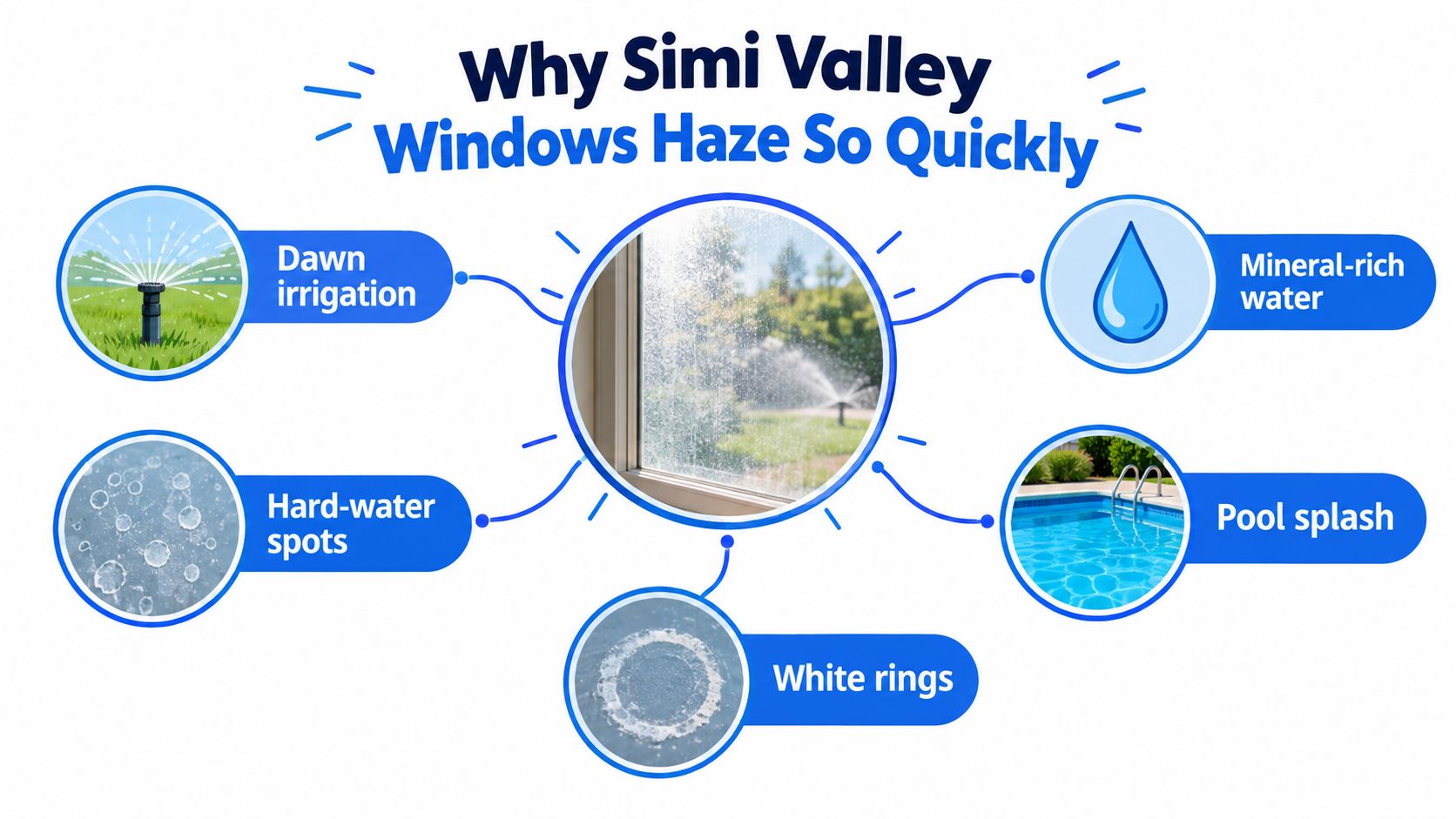
Why Simi Valley Windows Haze So Quickly
You get a quote, the windows get cleaned, and a week later the same back sliders still look cloudy by noon. That usually traces back to where the water is coming from and where it lands, not to whether someone wiped hard enough.
What you’re actually seeing on the glass
On a lot of Simi Valley homes, haze shows up on repeat offenders. The patio door near the lawn zone. The side-yard window that gets tagged by irrigation every morning. The sunny pane that dries fast and shows every spot. Those windows are collecting mineral residue in layers.
One reason is the water itself. Much of Simi Valley runs on imported water, and whatever minerals it carries stay on the glass when a sprinkler mist or hose splash dries in the sun. Pair that with overspray, hose splash, roof runoff, or pool water, and the glass stops behaving like a simple dusting job. It starts behaving like a hard-water surface.
Here’s the practical difference:
- Loose dirt comes off with normal cleaning.
- Mineral residue bonds to the glass and leaves a dull, cloudy cast.
- The same panes keep getting re-spotted because the same water keeps hitting them.
If one side of the house always looks worse, believe the pattern.
Why quick wipe-downs leave windows looking dirty
Soap helps with grime. It does a poor job on baked-on mineral film. Once droplets dry on warm glass over and over, they leave spotting, ghosty streaks, and that chalky haze you notice in direct sun.
Screens confuse the issue too. A dirty screen can make decent glass look worse than it is, especially after wind pushes fine grit into the mesh. If your screens stay dusty, this screen cleaning guide for Simi Valley wind and ash conditions explains why that buildup happens so fast here.
The blunt answer is simple. In Simi Valley, window haze is usually a water-chemistry and irrigation-layout problem first. Homes that get ahead of it usually settle into a three-cleanings-per-year rhythm, with extra attention on the panes that take repeated overspray.
Inland Climate and What It Does to Glass
Simi Valley doesn’t treat glass the way the coast does. Inland homes take more punishment, and the dirt doesn’t just land softly and wait to be rinsed off. It bakes on.
Ventura County planning material describes the region as Mediterranean, with cool, dry summers near the coast and warm, dry summers inland. It also notes that 95% of annual rainfall falls from November through April, with average rainfall of about 14 inches along the coast near Oxnard, Ventura, Simi Valley, and Thousand Oaks, and it specifically calls out Santa Ana winds as strong, dry, gusty downslope winds pushing air westward toward the coast, according to U.S. Census QuickFacts for Simi Valley.
Why inland exposure dirties glass faster
That weather pattern creates a very simple maintenance problem:
| Condition | What it does to windows |
|---|---|
| Long dry stretches | Dust and pollen sit on the glass instead of getting rinsed away |
| Seasonal wind events | Fine grit gets driven into screens, tracks, and window edges |
| Rain concentrated in one part of the year | Dirty panes stay dirty for long periods, then streak when the season changes |
On a coastal house, marine moisture can soften what lands on the glass. Inland, dry heat and wind tend to leave a tighter, chalkier mess. That’s why homeowners who moved from Ventura or a milder part of the county often underestimate what Simi Valley windows need.
The wind factor homeowners ignore
There’s also the timing problem. Wind-driven grit loads screens and glass fast, and active gusts can ruin a cleaning if someone works at the wrong time.
Clean glass in Simi Valley doesn’t stay clean because the weather is nice. It stays clean when the home’s exposure is managed and the cleaning rhythm matches the climate.
If your house faces open lots, foothills, or a road that kicks up dust, you need to assume more frequent exterior care than a sheltered cul-de-sac home. That’s not upselling. That’s just how inland glass lives here.
What a Professional Simi Valley Visit Actually Includes
A real residential visit should cover more than the shiny part you can see from the street. If a quote only mentions “windows,” ask what that means. In this trade, homeowners get burned when one company is quoting complete service and another is quoting exterior glass only.

The normal order of work
On a typical single-family Simi Valley home, the work usually flows like this:
-
Exterior glass first
Second-story panes and awkward exterior windows are often cleaned with a purified water-fed pole from the ground. That reduces ladder use and keeps the rinse from drying into fresh spots. -
Screens come out and get cleaned separately
A good crew doesn’t just brush them with a towel and call it done. Screens hold dust, pollen, and grit that can make clean windows look dirty again almost immediately. -
Tracks, frames, and sills get detailed
If those areas stay packed with grit, the next wind event or first bit of moisture pushes grime right back onto the glass. -
Interior glass gets hand cleaned
Divided panes, French panes, and finger-smudge areas get finished with a more controlled hand method. -
Final inspection and touch-up
The crew should walk the problem windows again. The patio door by the sprinkler line. The skylight with old spotting. The pane near the dog run.
What belongs in a complete quote
Here’s the simple version homeowners should use when comparing bids:
- Standard work should include exterior glass, interior glass if requested, screens, and wipe-down of frames, tracks, and sills.
- Often priced separately are heavily stained skylights, mirror walls, chandeliers, or anything that needs restoration instead of normal cleaning.
- Ask about access if the home has hard-to-reach clerestory windows or unusual rooflines.
If you’re vetting a crew, insurance matters, and homeowners often confuse that with bonding. This short guide on bonded vs insured explained does a good job clearing up what each one protects.
A cheap quote is usually missing labor somewhere. Most often it’s screens, tracks, or interior panes.
The other thing I’d tell any homeowner in Simi Valley is to ask what method they use on the outside. For example, Aloha Window Bros states that its service includes windows, screens, frames, and sills as part of one visit for homes in the area. That’s the right structure to look for, whether you hire them or someone else.
How Purified Water Cleaning Solves Hard-Water Spots
Traditional soap-and-squeegee work still has its place, especially inside. But outside, on Simi Valley homes dealing with sprinkler overspray and mineral residue, purified water is the method that fits the problem.
What purified water actually means
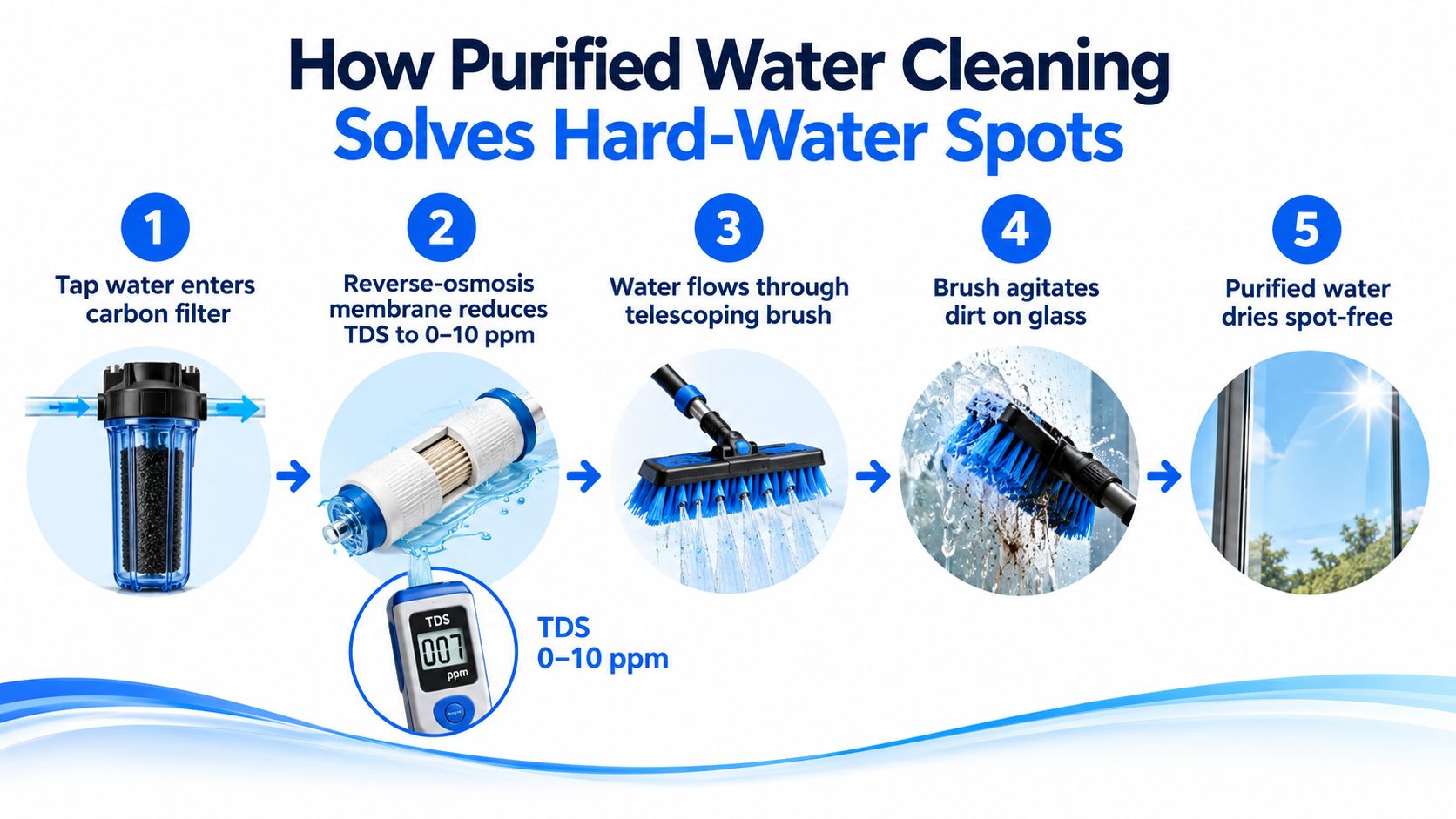
Industry guidance puts effective pure-water cleaning at 0 to 10 ppm total dissolved solids, and deionization or reverse osmosis removes minerals like calcium and magnesium so the rinse can dry spot-free instead of leaving residue. That’s especially useful where repeated wetting and drying can bond mineral deposits to glass, as explained in this overview of purified water window cleaning.
In plain English, the process is straightforward:
- Tap water gets filtered.
- The dissolved minerals are stripped out.
- A brush agitates the pane.
- Purified rinse water carries debris off the glass.
- The window dries without mineral spotting from the rinse itself.
Why it beats a spray bottle outside
Here’s the side-by-side comparison that matters most on exterior residential glass:
| Method | Best use | Limitation |
|---|---|---|
| Soap and squeegee | Interior panes and controlled hand work | Outside, leftover residue or poor rinse water can re-mark the glass |
| Purified water-fed pole | Exterior maintenance, upper panes, skylights within reach | Won’t reverse severe etching that’s already become damage |
This method also solves a labor problem. A crew can clean raised exterior glass from the ground, flush frames more thoroughly, and avoid dragging hose minerals back onto the pane during final rinse. On homes with pool splash, irrigation mist, and dusty screens all hitting the same side yard, that matters a lot.
The better way to bundle the visit
For most Simi Valley homes, I recommend a four-in-one visit. Exterior glass, interior glass if needed, screens, and frame-track-sill cleanup. If one part gets skipped, the rest doesn’t hold.
If your exterior cleaner uses local tap water for the final rinse, don’t be surprised when the glass looks tired again fast.
That’s why purified water isn’t some fancy add-on. On the right houses, it’s the baseline method.
Pricing, Quotes, and Booking in Simi Valley
Homeowners always want a number first. I get it. But with window cleaning in Simi Valley, the quote only means something if it reflects your actual glass, not a guess over the phone.
What changes the quote
A solid estimate usually comes down to a few practical factors:
- Window count: More panes means more labor. Simple.
- Height and access: A single-story ranch and a two-story with awkward side-yard access are different jobs.
- Screen quantity and condition: Dirty, brittle, or tight-fit screens take longer.
- Mineral buildup severity: Light spotting is maintenance. Heavy haze can push the job toward restoration work.
If you want a smart way to compare bids, this breakdown of window cleaning quotes is useful because it focuses on what should be included, not just the headline price.
Don’t compare incomplete quotes
A homeowner will sometimes tell me one company came in much lower. Then I ask what was included. A lot of those low prices are for exterior glass only, with screens, tracks, and interior panes left out.
Use this checklist before you say yes to any estimate:
- Ask what’s included by default. Screens, tracks, sills, and frames shouldn’t be vague.
- Ask how they handle mineral spotting. If the answer sounds like “we spray it and wipe it,” keep looking.
- Ask whether the quote was built from an on-site look. That’s how you avoid surprise add-ons on job day.
Booking should be simple
The process should be boring, which is a compliment. You call or submit a form, someone schedules a walk-through, the crew looks at the actual windows, and you get a written quote. If a company can’t explain what they’re charging for, they’re not ready to work on hard-water-prone glass.
One more thing. If you care about results, don’t shop purely on the lowest number. Shop on whether the company understands why your windows are getting hazy in the first place.
How Often Simi Valley Homes Really Need Cleaning
Most inland homes here don’t need random cleanings. They need a repeat rhythm that matches how the house gets dirty.
The practical baseline for many Simi Valley homes is three cleanings a year. That local recommendation shows up in Simi Valley service content focused on hard-water spotting, sprinkler exposure, and the way haze returns on inland glass. It fits what homeowners deal with much better than the lazy advice to “just do it when it looks dirty.”

A realistic schedule for a typical home
Take a common setup. Single-story house. East and south exposure. Backyard lawn sprinkler. A couple skylights. That home usually does well with this rhythm:
- Spring visit after pollen and irrigation adjustments
- Late summer or pre-fall visit once haze and screen dust build up
- Late fall cleaning after wind season and before winter weather marks dirty glass
That cadence works because it follows triggers, not just the calendar.
Signs it’s time before your next scheduled visit
Some homes need attention sooner. You’ll know it by the pattern:
| Sign | What it usually means |
|---|---|
| White rings or chalky dots | Mineral spotting is building again |
| Cloudy look that doesn’t wipe off well | You’re dealing with bonded residue, not loose dust |
| Screens look gray or packed with debris | Airborne grit is muting the whole window |
| Recent landscaping or sprinkler changes | The old exposure pattern just changed |
A sheltered cul-de-sac home can sometimes stretch the timing. A foothill lot or open-corner property usually can’t. If your house catches more dust, more wind, and more sprinkler drift, lock in recurring service and stop pretending one annual cleaning will hold.
Preparing Your Home for a Window Cleaning Visit
You don’t need to overthink prep, but a few small moves make the visit smoother and protect the result.
What to do before the crew arrives
Use this simple pre-arrival checklist:
- Open side gates: Backyard-facing glass is often where the worst spotting lives.
- Move patio furniture and potted plants: Sliding doors and low windows need room to work safely.
- Shut off irrigation the night before: Freshly cleaned glass shouldn’t get hit mid-job by dawn sprinklers.
- Secure pets and clear interior access: Especially for bedrooms, sliders, and upstairs rooms if interior work is included.
That irrigation point matters more in Simi Valley than people think. If the system fires while the crew is outside, you can re-spot the same panes before the job is even finished.
What to confirm during the walkthrough
When the crew arrives, walk the house with them and point out the known problem areas.
- Flag cracked panes or torn screens so nobody discovers them halfway through removal.
- Call out skylights and solar panels if you want them included.
- Mention old hard-water history on any window that stays hazy after normal cleaning.
- Show them the sprinkler zones that regularly hit glass.
The best walkthroughs are short and specific. “These two windows catch the sprinkler.” “That slider hazes first.” “Those skylights matter.”
How to choose the right recurring cadence
Don’t copy your neighbor’s schedule unless your exposure is the same. A shady interior street and a dusty corner lot are not the same maintenance job.
If you’re cleaning partly for resale, photos, or general appearance, remember that visible exterior details shape first impressions fast. Clean windows are one of the few curb-appeal upgrades that people notice immediately without you saying a word.
For most homes here, start with three visits a year. If your lot takes heavier dust, stronger wind exposure, or constant sprinkler overspray, consider stepping up the frequency. And if a wind event is rolling through, reschedule. Cleaning in bad gusts is how streaks get blamed on the crew when the weather caused the problem.
If your windows in Simi Valley keep turning hazy again, the fix is to clean for the cause: mineral spotting, dust-loaded screens, and exposure from sprinklers and inland wind. Aloha Window Bros handles exterior and interior glass, screens, frames, and sills with methods that fit those local conditions. If you want a quote that reflects your actual windows instead of a guess, start there and get the house looked at properly.