

You notice them after the sprinklers run: pale rings on the lower panes, a cloudy veil across the glass, or tiny white flecks that remain after an ordinary window wash. Coastal mist can leave a similar film, while inland dust sticks to every wet surface and makes the marks look worse. You wipe harder, the window seems clearer for a moment, and then the haze returns when the light hits it from an angle.
The important question isn’t what removes hard water stains. It’s whether you’re looking at removable mineral deposits or glass that has already been etched. Those conditions can look similar, but they require different tools, different expectations, and different levels of caution.
In Ventura and Santa Barbara homes, I see both problems. Sprinkler overspray creates concentrated spotting, while salt air and dry foothill winds leave a broader film on panes, screens, frames, and tracks. This guide starts with diagnosis, then matches vinegar, citric acid, commercial descalers, or polishing to the damage level. You’ll also find a safe DIY workflow and prevention habits that help protect glass before the next round of water dries.
Table of Contents
- Introduction Why Hard Water Spots Keep Coming Back
- What Causes Hard Water Stains on Glass and Frames
- What Removes Hard Water Stains and When to Use Each Option
- How to Remove Hard Water Stains Safely Without Scratching Glass
- Prevention Tips for Coastal and Inland Windows
- When to Call a Pro and What to Expect From Service
Introduction Why Hard Water Spots Keep Coming Back
A homeowner usually discovers the problem in an unhelpful way. The glass looked acceptable in soft morning light, but after a sunny afternoon, every sprinkler mark becomes visible. A microfiber cloth removes loose dirt, yet the white circles remain. That’s because ordinary glass cleaner is designed to lift oils, dust, and light residue, not dissolve mineral scale.
Hard water stains are deposits left behind when water evaporates. If the water keeps reaching the same pane, the deposits keep returning after cleaning. A window beside a lawn sprinkler may develop distinct arcs and rings, while a coastal window may show a duller haze from repeated moisture and airborne residue.
The first decision is not which cleaner to buy. It’s whether the mark sits on the glass or has changed the glass surface.
Fresh surface film often responds to a mild acid and gentle agitation. Older buildup may be harder and more bonded. If mineral deposits have remained for months and etched the glass, cleaning chemicals may no longer restore clarity. At that point, polishing or professional restoration becomes more realistic than repeated scrubbing.
The practical route is straightforward:
- Identify the residue: Look for raised, chalky, or rough deposits versus a smooth haze that stays unchanged after cleaning.
- Choose the least aggressive remover: Start with a controlled vinegar treatment, not a rough pad or razor.
- Protect the surrounding materials: Frames, painted sills, coatings, tint, and window film don’t all tolerate the same products.
- Prevent another deposit: Redirect water, rinse residue, wash screens, and dry the glass before evaporation leaves a new ring.
The sections below explain the mineral cause, compare removal options, give a safe vinegar workflow, and separate coastal prevention from inland maintenance.
What Causes Hard Water Stains on Glass and Frames
When a wet pane dries, the water disappears but dissolved material remains. Hard water stains are mostly calcium and magnesium carbonate, with silica in some supplies, as our hard water spot removal guide explains. Calcium and magnesium carbonate create much of the familiar white crust or cloudy film, while silica can form a tighter, more stubborn residue.
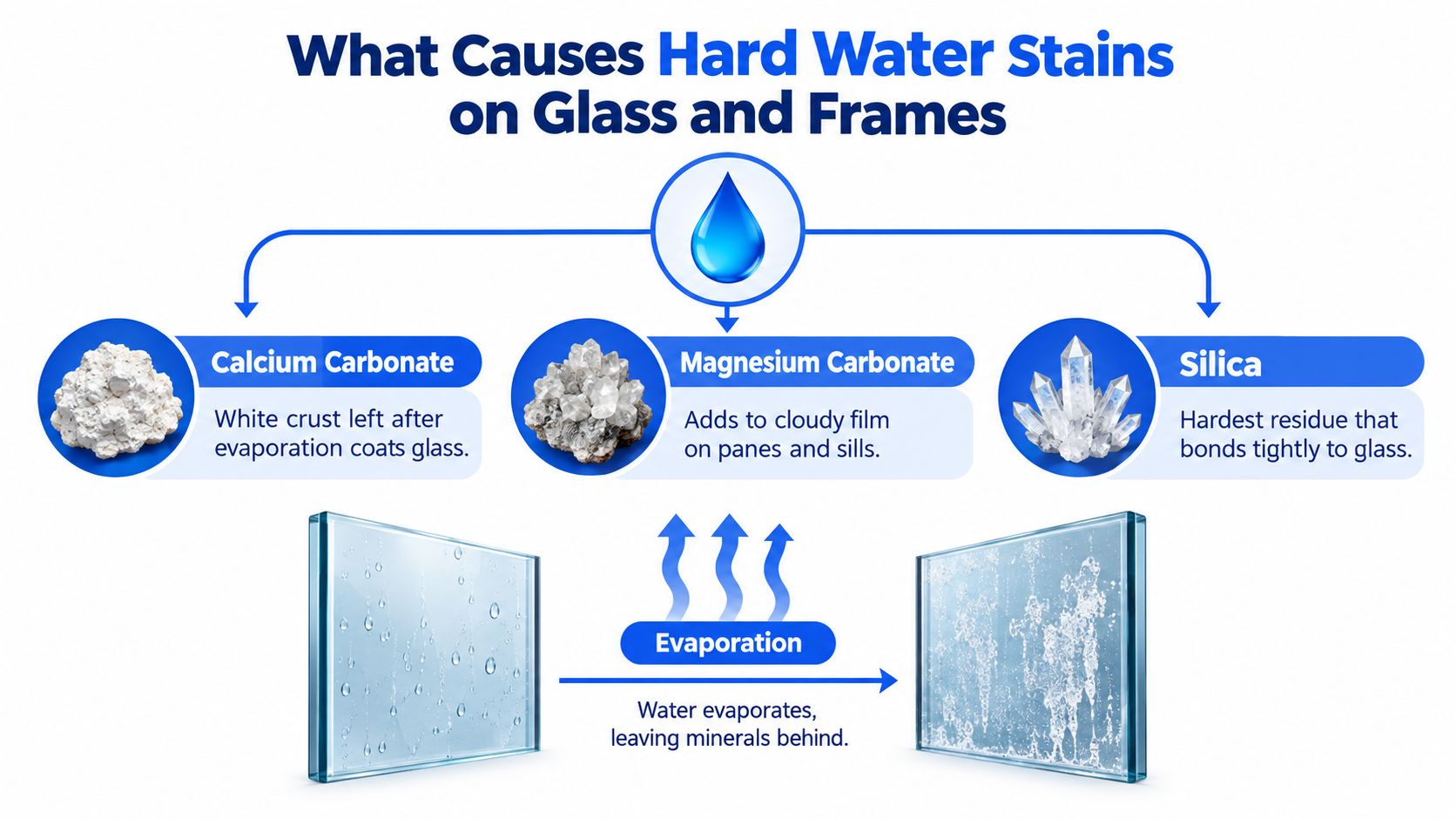
The chemistry determines what removes hard water stains. Carbonate deposits respond to acids because the acid reacts with carbonate in the mineral structure. White vinegar is typically around pH 2.4 to 3.4, while citric acid is around pH 2.2, as documented in the same window-cleaning reference. Vinegar’s acetic acid is specifically noted as effective against calcium carbonate because it protonates carbonate ions and helps break down the mineral matrix.
Silica is different. Acid may soften or remove some surrounding residue, but a silica-rich mark can remain firmly bonded. That’s one reason a stain that looks like ordinary scale may resist several cleaning attempts.
Surface film or etched glass
A surface deposit may feel slightly rough, appear chalky, or change as you wet and wipe it. Under angled light, you may see a defined edge where a droplet dried. A clean test area can help. Apply a small amount of the chosen mild acid, keep it wet, wipe gently, rinse, and inspect the pane after drying.
Etching is a change in the glass itself. It often appears as a smooth, dull haze that remains after the visible residue has been removed. Guides on hard-water etching versus deposits warn that buildup left for months may require mechanical polishing or restoration instead of more chemical cleaner.
Why local conditions speed the problem
In coastal areas, salt aerosol and persistent moisture can leave the glass damp long enough for residue to concentrate. Inland homes face a different combination, with sprinkler overspray, dry air, foothill dust, and windborne grit. Frames and sills collect the same material, then transfer it back onto the pane during the next wash or rainfall.
If your water comes from a well, the mineral profile can make spotting especially noticeable. The Ojai well-water guide from Aloha Window Bros offers local context for why some homes need a more careful diagnosis before repeated DIY treatment.
What Removes Hard Water Stains and When to Use Each Option
No single remover fits every pane. The right choice depends on how fresh the deposit is, how strongly it’s bonded, and whether the glass has a coating, tint, or film. Start with the mildest method that matches the diagnosis.
Distilled white vinegar is the practical first choice for light or moderate carbonate film. A 50/50 mixture with water gives useful contact without immediately reaching for a stronger product. Undiluted vinegar may suit lighter isolated spots, but it still needs careful handling around frames and seals.
Citric acid is another mild-acid option. It can be useful when you want an alternative to vinegar, although the lower pH noted in the verified guidance means you shouldn’t assume it’s automatically safer for surrounding materials. Keep any acid on the glass only, and test an inconspicuous area first.
Commercial limescale removers can be more aggressive and may work on mineral deposits that respond slowly to vinegar. The trade-off is a higher risk of damage to frames, finishes, seals, coatings, tint, or window film. Use only a product whose label allows glass and follow its instructions. Never combine acidic cleaners with bleach.
Mechanical polishing belongs in a different category. It doesn’t dissolve the deposit. It removes or smooths material through controlled abrasion, which may be appropriate for etched glass but is risky in untrained hands. A green Scotch-Brite pad, steel wool, gritty powder, or excessive pressure can leave scratches that become more visible in sunlight. Window glass requires softer tools and stricter caution than a tile or fixture.
Choosing the right remover for your stain level
| Remover | Best For | Risk to Glass | Key Tip |
|---|---|---|---|
| 50/50 white vinegar and water | Fresh or moderate surface mineral film | Low when used carefully, but acids can affect surrounding finishes | Keep it wet, use gentle pressure, rinse fully |
| Citric acid solution | Carbonate-based deposits needing an alternative mild acid | Acid exposure can harm frames, coatings, tint, or film | Test first and control contact closely |
| Commercial limescale remover | Stubborn deposits that remain after a careful mild-acid attempt | Higher risk if the product isn’t approved for the surface | Read the label and never mix cleaners |
| Mechanical polishing | Suspected etching or bonded residue | Scratches, distortion, or uneven finish if done poorly | Use a trained glass-restoration professional |
Before any treatment, review this streak-free window cleaning guide so the final rinse and drying stage doesn’t leave a second layer of residue behind.
How to Remove Hard Water Stains Safely Without Scratching Glass
For a typical surface deposit, use a controlled 50/50 mixture of distilled white vinegar and water. The purpose isn’t to overpower the glass. It’s to give the acid enough continuous contact to soften carbonate minerals while you avoid the pressure and abrasion that cause permanent scratches.
Start in shade, not on a pane that’s hot enough to dry the solution immediately. Remove loose grit first with a clean rinse or soft wash, because rubbing sand and dust across glass can create scratches before the stain treatment even begins. Protect nearby frames, painted surfaces, and sills with tape or a cover, and don’t let the acidic mixture pool in tracks.
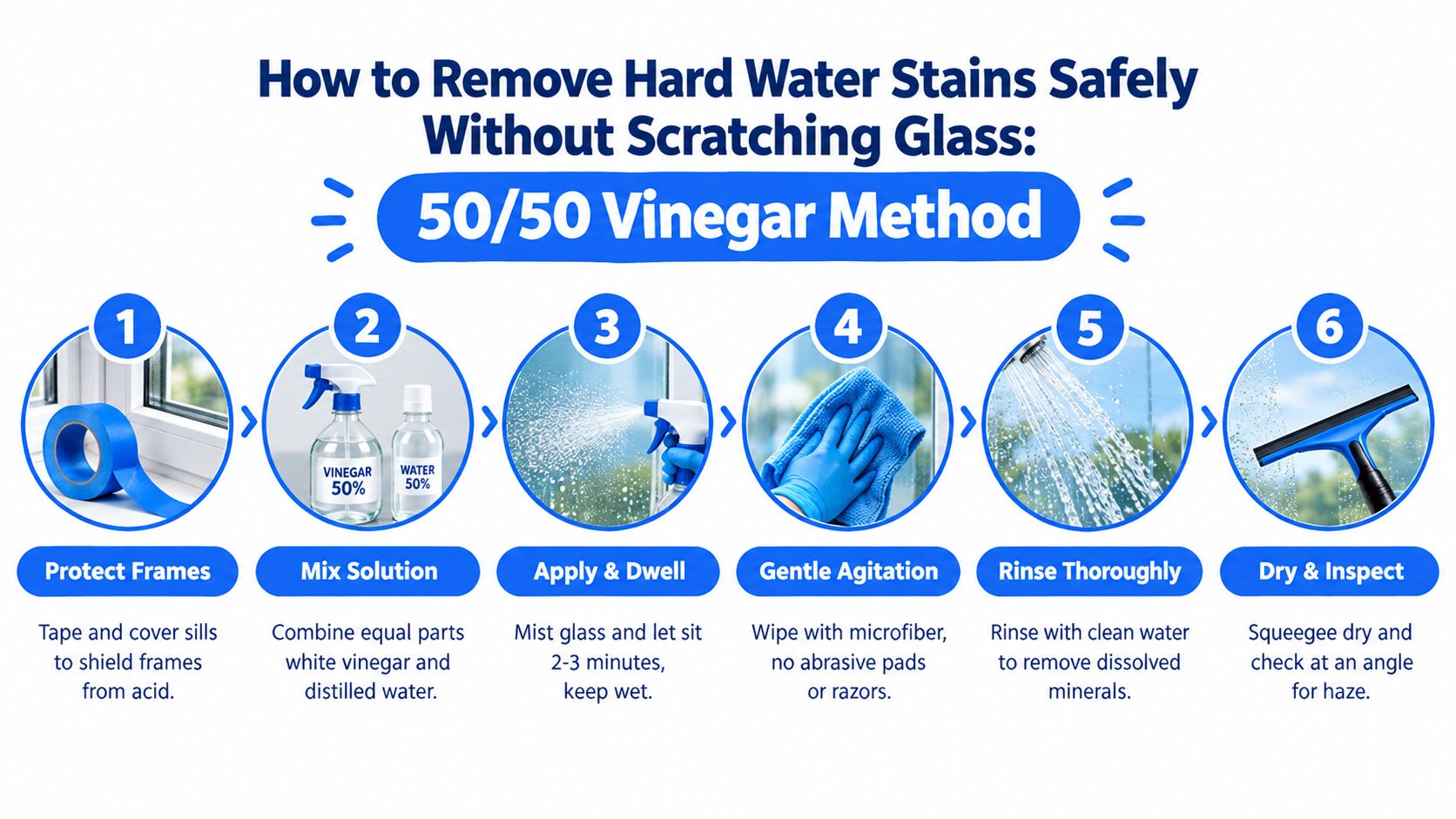
Mix equal parts distilled white vinegar and water in a clean spray bottle. Apply enough to wet the affected area completely, then maintain contact for 5 to 15 minutes. The shorter end may suit a light film, while heavier deposits need closer attention and may require a second controlled application.
Don’t allow the solution to dry on the pane. Re-mist lightly if the surface starts drying, especially around edges or in warm conditions. Continuous wet contact gives the acid time to work. Letting it dry reduces that benefit and can leave dissolved minerals behind in another patchy film.
Agitate lightly, then rinse completely
Use a microfiber cloth or a non-abrasive pad with light pressure. Work a small area first and inspect it before treating the entire window. Never use a green Scotch-Brite pad, razor, steel wool, or gritty powder on glass, and don’t use abrasive methods on coated, tinted, or filmed glass.
Once the deposit has softened, rinse thoroughly with clean water. Purified or distilled water is preferable for the final rinse because it reduces the chance of depositing another mineral ring as the pane dries. Squeegee from the top down, then detail the edges with a clean microfiber towel.
Screens and tracks need attention too. Wash screens separately and let them dry before reinstalling them. Vacuum or wipe tracks rather than pushing loosened grit onto the glass. If a screen remains dusty, the next breeze can put the same particles back on a freshly cleaned pane.
Stop when the glass is smooth but the haze remains. More pressure won’t turn etching back into clear glass.
The two common failure modes are simple: letting the acid dry out and pressing too hard. If two careful treatments don’t change the mark, or if the stain has been present for months, stop escalating chemicals and consider polishing or a professional assessment.
Use this video as a visual reference for the handling sequence and tool control:
Prevention Tips for Coastal and Inland Windows
Removal becomes easier when less mineral-laden water reaches the glass. In coastal Ventura, Oxnard, Goleta, Santa Barbara, and nearby communities, salt mist can settle on panes and frames before moisture dries. Inland foothill homes deal more often with sprinkler overspray, dry-season dust, and wind that carries grit onto wet surfaces.
Redirect sprinkler heads away from windows and adjust watering so the spray doesn’t repeatedly hit the same lower pane. If overspray is unavoidable, a quick clean-water rinse before the droplets dry can prevent a concentrated ring from forming. Don’t wait until the glass develops a visible crust.
Coastal homes benefit from rinsing after a noticeable salt-mist event, especially when the glass feels tacky or looks hazy. Inland homes should pay close attention after dusty winds and before the first rain, when accumulated grit can turn into streaky mud on panes and screens.
Match upkeep to exposure
There isn’t one useful schedule for every property. Homes close to the coast generally need more frequent light rinsing and glass checks, while inland homes often need closer attention during dry, windy periods and after sprinkler use. Let the exposure decide the interval, not a calendar reminder alone.
During each window wash:
- Check sprinkler patterns: Look for fresh arcs or rings on lower panes and redirect the spray immediately.
- Rinse screens: Mineral dust and pollen held in the mesh can transfer back to clean glass.
- Wipe sills and tracks: Remove residue before it mixes with the next wet cleaning.
- Finish with purified water: A low-mineral final rinse helps prevent new spotting as the pane dries.
- Inspect in angled light: Smooth haze, persistent after cleaning, may indicate etching rather than remaining scale.
A dry pane is protected only if the surrounding screen, sill, and track aren’t feeding residue back onto it.
A simple utility-closet checklist keeps the habit practical: inspect sprinkler exposure, rinse after coastal mist or dusty wind, wash screens, wipe tracks, and dry the glass fully. If spotting keeps returning despite these changes, the water source and the glass condition both deserve closer attention.
When to Call a Pro and What to Expect From Service
Try DIY treatment when the pane has a fresh, clearly defined mineral film and is accessible from the ground. Call a professional when the haze remains after careful cleaning, when the glass is coated or filmed, or when the pane is high, large, difficult to reach, or part of a solar-panel system. Etched glass needs a restoration assessment, not increasingly harsh chemicals.
A thorough visit should cover more than a quick spray and wipe. A professional service may include interior and exterior washing with eco-friendly biodegradable solutions, screen removal and pressurized cleaning, frame and track detailing, and purified-water cleaning for hard-to-reach glass. You can review how that method works in this guide to purified-water window cleaning.
Ask for an on-site assessment before agreeing to restoration work. The technician should distinguish removable deposits from etching, explain which surfaces are safe to treat, protect frames and landscaping, and walk through the finished work with you. A free estimate lets you compare the cost of specialized restoration with the risk of scratching or damaging the glass yourself.
Aloha Window Bros cleans windows, screens, frames, and sills across Ventura County and Santa Barbara County, including hard-water spotting from sprinkler overspray and coastal exposure. If your panes still look hazy after a careful vinegar treatment, visit Aloha Window Bros to request a free on-site or virtual estimate and have the glass condition assessed before it gets worse.